Getting Blood to Babies in Need
By Alex Keilty, American Red Cross volunteer

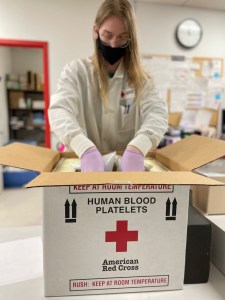
Across the top of the box is a typed address label for a local hospital and a simple handwritten note: “Pediatric Order.” Down the side is the American Red Cross logo and the words “Human Blood.”
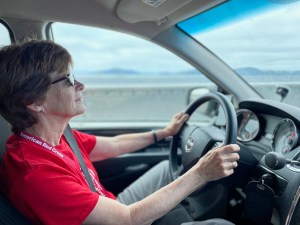
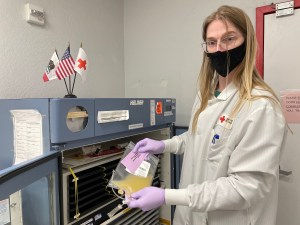
Volunteer Claudia Langley loads the white box into the trunk of a Red Cross van, along with the rest of the boxes packed with blood products she is delivering to four hospitals today.
As she starts the engine and types the address of the hospital into the GPS on her cell phone she says, “The sad part is there are not enough donations.”
It’s true, she’s right. Certain kinds of blood are rarer than others. For example, this pediatric order she is carrying today – blood destined for babies – must be screened for a flu-like virus called CMV that is very common and mild in adults but can be fatal to infants. Only about 15 percent of American adults have not been exposed to CMV and therefore are able to donate to newborns. Plus, blood products have a limited shelf life so there is always a need for more donations to replenish the supply.
But today, there is blood available for a tiny patient in MarinHealth Medical Center, thanks to blood donors and volunteers like Claudia, a blood transportation specialist.
Retired from a career in art direction and graphic design, Claudia has been doing this role for the Red Cross for 2.5 years. To get trained, she completed a course online and then shadowed a fellow volunteer until she felt comfortable going alone. Now she does a four-hour shift once a week by herself.
As she drives across the Richmond Bridge over San Francisco Bay she plays music on the radio – “anything but country” – and explains how her volunteer role gives her faith in the good in others.
“It makes me feel better about people in general. You run across people who are trying to help,” she says.

Half an hour after setting off from the Red Cross Oakland Blood Center, she pulls up to the front of the hospital, stacks some of the Red Cross boxes on a cart and rolls them to the lab. Clinical laboratory scientists will match the blood types of the donated blood to patients’ blood types and then give it to the doctors and nurses who are treating the babies and other patients awaiting these blood products.
Everyone she interacts with mentions how grateful they are for her efforts, including Red Cross staff, laboratory staff and even strangers in the hospital.
“Sometimes random people walk by and say thank you for doing this,” she says.
Claudia has encouraged friends and acquaintances to begin volunteering as Red Cross blood transportation specialists because of how positive her experience has been.
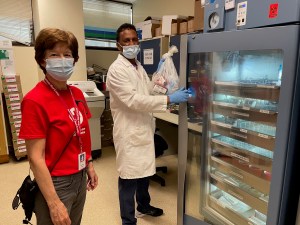
“It’s not strenuous or super challenging, but it’s something you can do that’s helpful,” she says. “I am thrilled with the way they treat me and the way they are organized for the drivers and deliveries.”
From Marin she will do deliveries to hospitals in Richmond, Alameda and then back to Oakland where she will hand in the keys to the van and head home before traffic gets busy.
She describes her role as “getting the blood to where it needs to be” and today she definitely delivered blood to where it needed to be: to a tiny patient waiting in hospital for life-saving treatment.
The Red Cross relies on volunteers like Claudia to ensure patients have lifesaving blood products when they need them – and more volunteers are needed. Learn more and submit a volunteer application at redcross.org/volunteertoday.


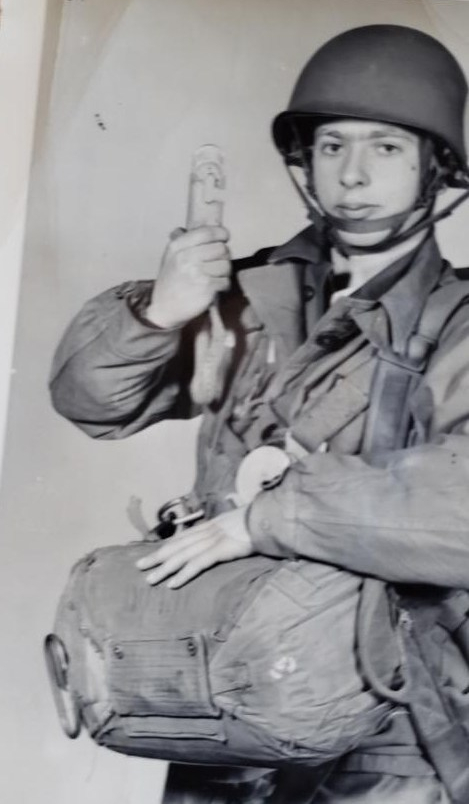 Sitting at the dinner table, my whole family laughing, my Uncle Sammy once again tells the same story that, in my mind, is paired with the essence of who he was. He would always smile as he told it, even though I’m quite sure that on the day the story took place, he was doing the exact opposite. See, my Uncle Sammy was a paratrooper in Central America, and in his youth, he was quite proud to have earned the title. Unfortunately for him and his pride, during his very last training jump, he managed to land not on his target, and not even on the ground near his target, but instead, in an unsuspecting and probably quite surprised tree. With that, he managed to break his leg, expel himself from the paratroopers, and was instead sent to Germany to be the assistant of a Jewish chaplain stationed there not long after the end of World War II. Though the story told at the dinner table would usually end here, followed by the continuous teasing of my family, his military experience did not. My Uncle Sammy, a once paratrooper, now chaplain’s assistant and Jewish American soldier, instead went on to help a still-grieving community heal from the recent trauma of the Holocaust.
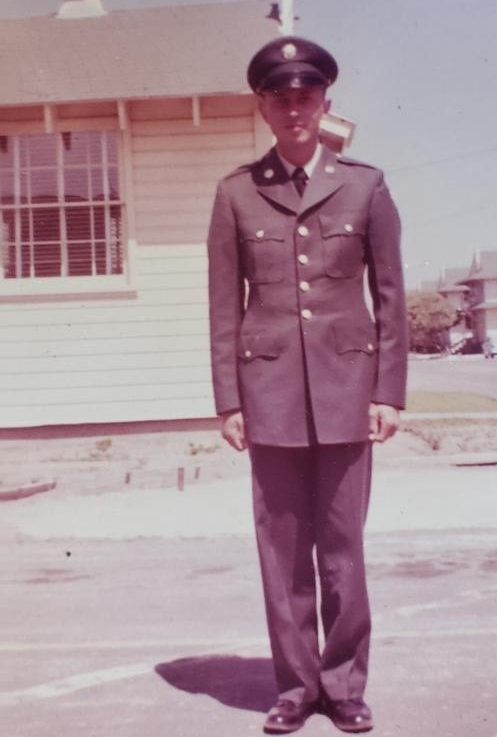 My grandfather passed when I was still relatively young. Yet, I will always remember the tribute the Navy paid to him when he passed, for how much it honored both his memory and his service, even though he had been active many, many years before. Though I only had to chance to know him when I was young, meaning I never got the chance to hear about his service from him, my dad was able later to tell me about his time in the military. He had enlisted in the Navy during the Korean War and spent most of his time repairing ship motors in Japan and Hawaii. Two Navy members came to his memorial service and presented us with the American flag. To this day, every time I see it, proudly framed in a wooden triangle, I always think of him.
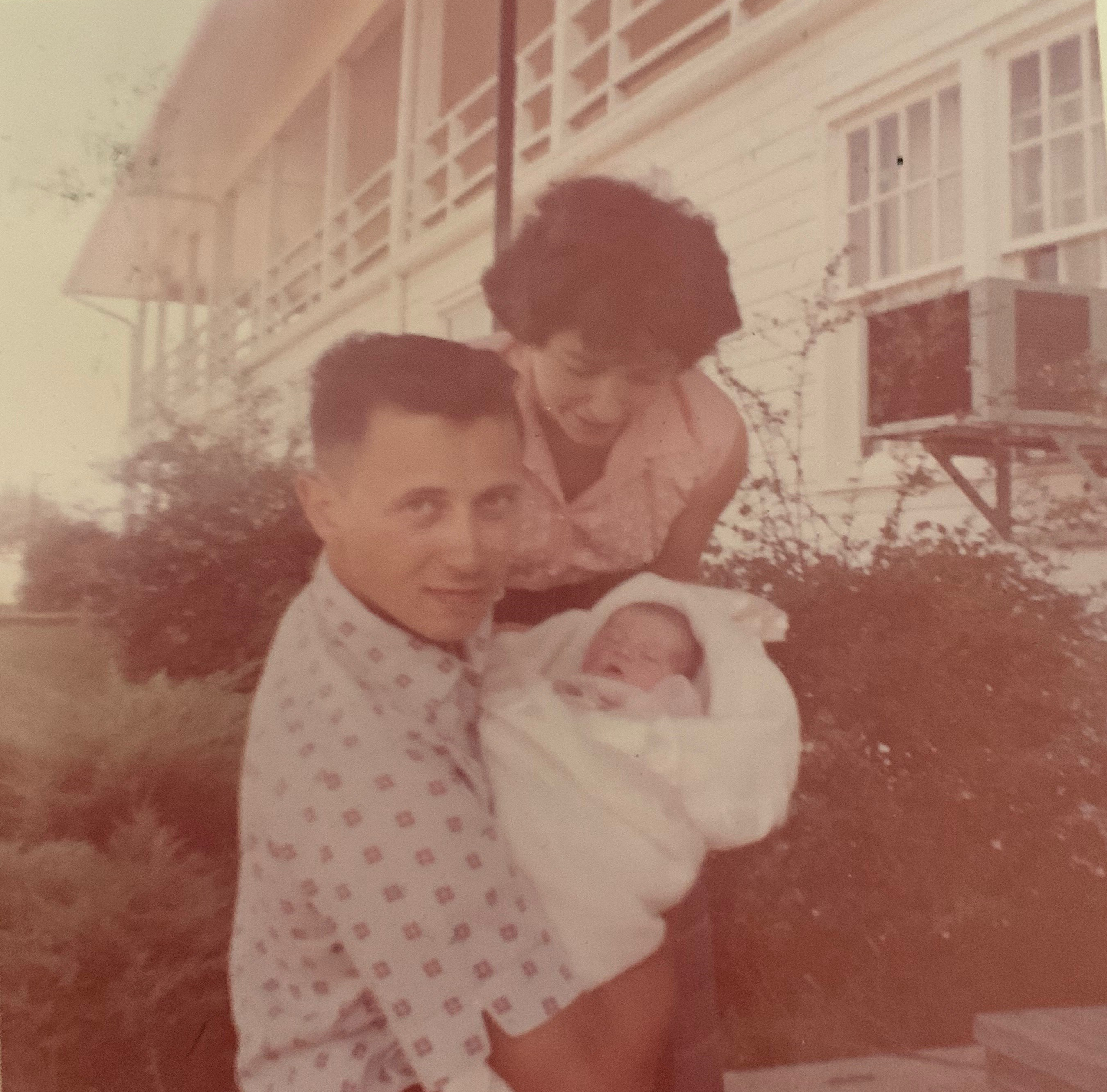 My mom was born an army brat on a base near Huntsville, Alabama, to my grandmother, an outgoing civil rights activist, and my grandfather, an army engineer, serving during Vietnam. They entered the service right as the sputnik missile was being launched into space, meaning that all the engineers stationed there were working hard to catch up. Being the critical mission that it was, the debate was rampant in the arsenal, and to encourage the troops to get back on track so that the USA could win the space race, John F Kennedy himself showed up to the base. My grandfather met the president with an outstretched hand and a quiet “wow.” Telling the story now, my grandfather always assures us that this was not in response to meeting the president of the United States, but instead was a reaction to the president’s choice of clothes. “I’d never seen a $1500 suit in real life before.”