Aliyah Yang (left) and a fellow delegate enjoy s’mores during the campfire activity.
When 15-year-old Aliyah Yang, a rising sophomore from Moraga, Calif., applied to attend the American Red Cross Northern California Coastal Regional Leadership Development Center (LDC), she wasn’t sure what to expect.
“I was excited because I got accepted,” she said. “But I also thought, ‘What if it’s super boring? What if everyone is mean?’”
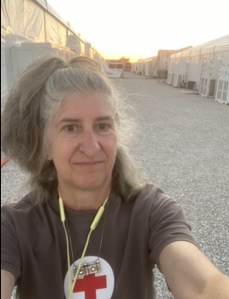
When the sky rained sparks over Paradise on November 8, 2018, igniting the Camp Fire, California’s deadliest wildfire to date, few could have guessed it would also reignite a creative flame in artist and retired nurse Gail DeMartis. Her encounter with Paradise began after the fire killed 85 people and incinerated 95 percent of the town’s buildings, when the need for support remained high. Already experienced as a Red Cross volunteer in the blood services sector, DeMartis leaped at the chance to join the Red Cross Disaster Response team for two weeks.
This first experience of working with fellow team members at a shelter and engaging closely with the people who lost everything in Paradise had a profound impact on her. It not only kicked off numerous future disaster response deployments, from California to Kentucky and back, but it also led to the creation of a work of art that would take eight years to complete.
By Pooja Klebig, American Red Cross Regional Communications Director
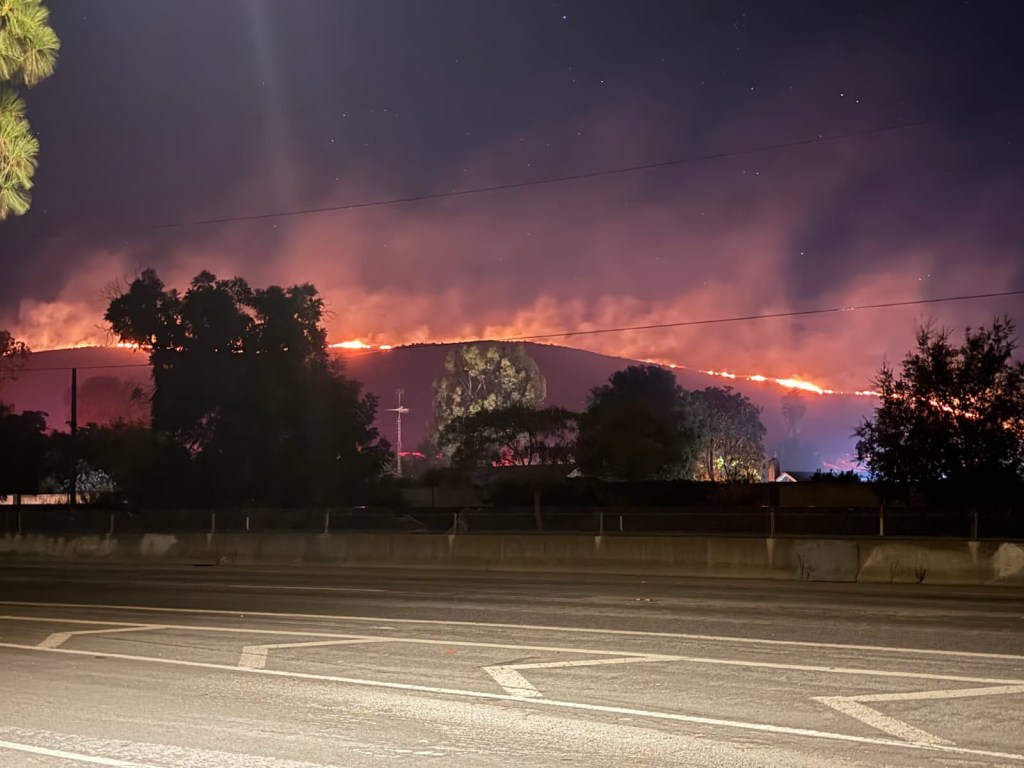
Like many evenings, my husband and I had settled in to catch a few minutes of the nightly news before heading to bed the evening of July 21st. One of the news stories focused on the “Little Fire” burning in the Sunol and Pleasanton area.
As I scrolled through Instagram, I saw updates from friends who lived in the Pleasanton area who had safely evacuated. I found myself hoping the fire would live up to its name and remain small. But as meteorologists talked about increasing winds, I couldn’t help but think about the 2025 wildfires in Los Angeles and how quickly things took a turn.
Just a few minutes later, my husband’s phone buzzed with a notification: a vegetation fire had been reported near South San Jose and Morgan Hill, not far from where we live.
By: Aarushi Saha, Red Cross Communications Volunteer
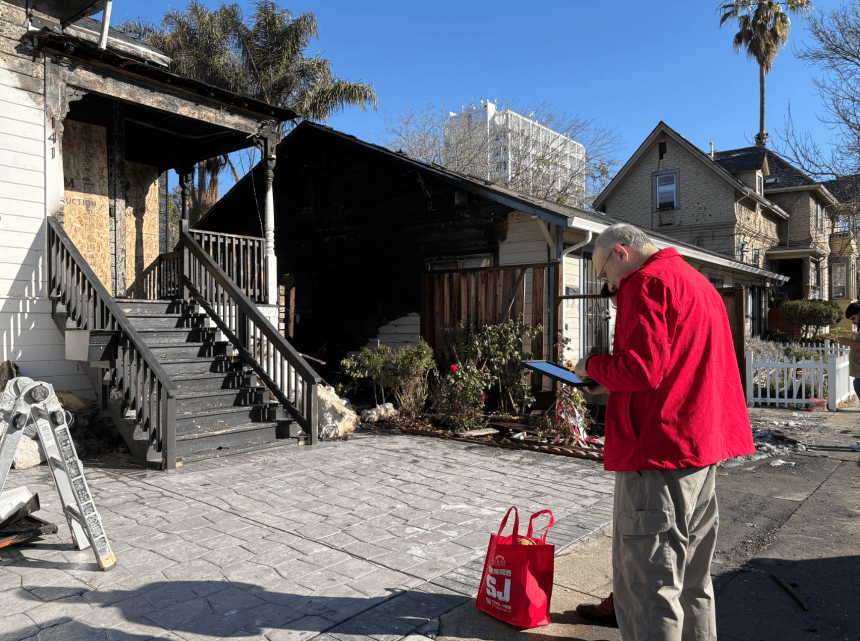
Micah and other volunteers responding to a house and duplex fire in San Jose. The team provided immediate support, including comfort kits and teddy bears for the children, to help the family through this difficult time.
“The fire was large enough that you could smell it a mile out. Like driving into it, you could smell it come into the vent of your car. By the time we got there, the house was fully engulfed, and in fact the second story had collapsed onto the first story. It was just chaotic,” recalls Micah Stroud of a house fire he responded to in Cupertino, Calif. a few months ago.
Micah, an American Red Cross volunteer, responds to many house fires in his role but this experience stayed with him the most.
The first resident he met on the scene had previously volunteered with the Red Cross, so she understood that Micah’s team was there to organize emergency housing and financial aid for people displaced by the fire. Her husband had been burned by the fire, and there was more bad news to come.
In October 1991, the Tunnel Fire tore through the Oakland Hills in California, killing 25 people and injuring 150 others. The first sign that something was wrong that day was a helicopter whirling overhead while dipping water out of Lake Temescal, recalls Matthew Fryer, who lived nearby. “I drove to investigate and saw that there was a fire on the side of the road, not far away,” he said. Eventually, a police car drove by announcing everyone had to evacuate.
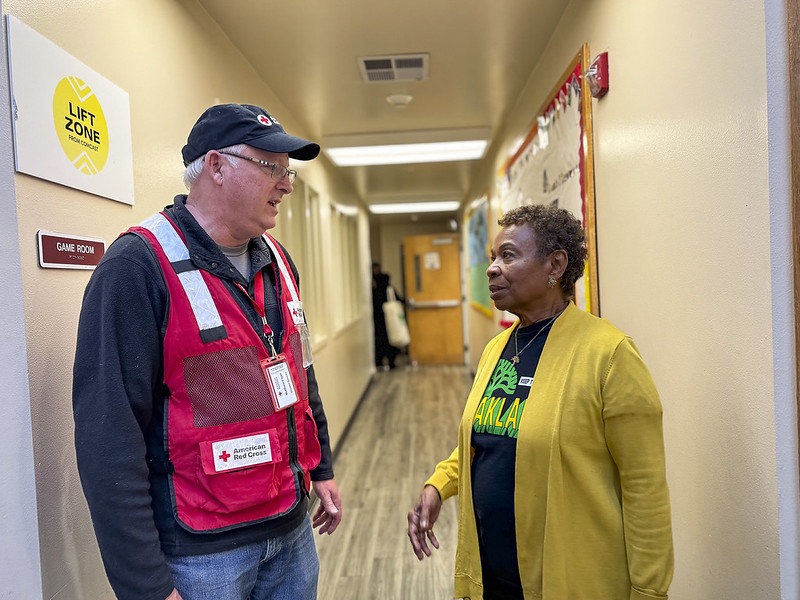
Matt (left) at a Red Cross shelter with City of Oakland Mayor Barbara Lee
Matt’s girlfriend helped him pack. He jokes that she packed only the clothes she liked, “leaving my favorite velour shirt!” Matt hosed down his plants and yard until the water stopped working and they fled to his brother’s house a couple of miles away. From there, they watched the fire wreak havoc.
Michael “Mig” Rampa, Community Disaster Program Manager
The phone calls often come in the middle of the night—when most people are still asleep. Whether it’s the fire department, the local emergency manager or the American Red Cross headquarters on the line, the message is always urgent. There’s been an emergency. People need help. And it’s the job of the Community Disaster Program Manager (CDPM) to make sure the Red Cross is there, ready to respond.
Michael “Mig” Rampa knows that call well.
Around 4 a.m. this past January, his phone rang with news of a fire in an 80-unit apartment complex in Oakland, Calif. Mig, who has served as CDPM in Alameda County for about a year and a half, sprang into action. He quickly dispatched his team of volunteers to the scene. When they arrived, the situation was already dire. They reported back: “We have 40 people already that are on the corner that have nowhere to go.”