
Firefighter, EMT and First Aid Trainer: Saving Lives Through the Years
By: AnnMarie Kornele, American Red Cross Volunteer
His father is a firefighter, his mother is a nurse, and his brother worked both as a firefighter and a nurse. You could say that saving lives runs in Steven Bradley’s family. So it’s no surprise that Steven himself has had a long career as a life saver.
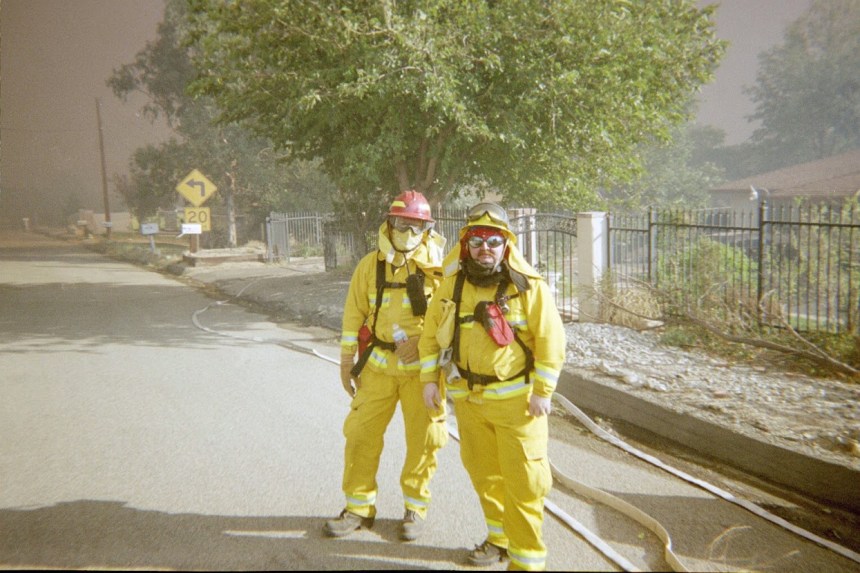
Steven is a second-generation firefighter from Fresno, Calif. Growing up in a family with a strong background in public service inspired him to pursue a career in firefighting. After graduating high school, Steven attended the Fresno Fire Academy and worked as an EMT before becoming a firefighter. He got his first job at the Madera County Fire Department working several years before relocating to San Diego with his wife, a California Highway Patrol (CHP) Officer, after she received her first duty station there. While she worked as a CHP officer, Steven worked for the San Diego Rural Fire Department.
Unfortunately, tragedy struck when Steven’s wife was injured from being hit by a drunk driver while on duty, forcing her to end her career with the CHP early.
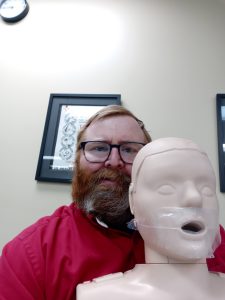
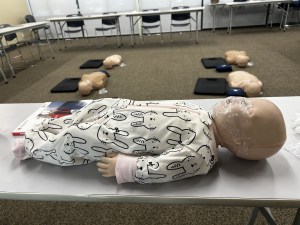
The couple made the decision to return to Central California, where Steven got a job with the California National Guard as a firefighter security officer at Camp Roberts, working for 15 years as a firefighter EMT before retiring due to a back injury. Although he could no longer work as a firefighter, he still wanted to make a difference, so he began teaching First Aid and CPR classes in 2017 with the American Red Cross.
For Steven, teaching these classes is more than educating students on emergency preparedness; it is a continuation of his lifelong dedication to public safety and commitment to saving lives as a first responder.
“Teaching First Aid CPR gives me a chance to still make an impact in the community, even though I can’t work as a firefighter, as an EMT anymore. But it still helps me so I can help save those lives, indirectly help those people out,” said Steven.
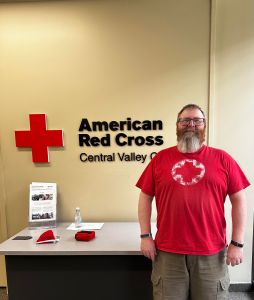
He enjoys being an instructor at the Red Cross because the organization’s broad reach allows him to connect with more people by teaching them important lifesaving skills. In addition to teaching at the Red Cross, he owns a business, offering first aid instruction and certifications for construction companies, school districts and first responders. He also works with charter schools teaching Hands-only CPR to high school students. CPR stands for cardiopulmonary resuscitation. It can help save a life during cardiac arrest, when the heart stops beating or beats too ineffectively to circulate blood to the brain and other vital organs.
“I think everybody should do it,” Steven says about taking CPR classes. “I think it should be a requirement to get out of high school; I mean, it’s just a small amount of time. It’s not that hard to learn, almost anybody can do it, and it can be a huge difference in somebody’s life.”
As a retired first responder, he knows first-hand how critical bystander CPR is for patients experiencing respiratory and other life-threatening emergencies.
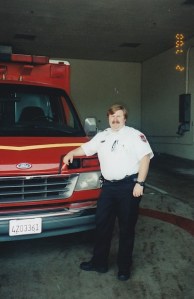
He recalls a memory from early in his career as an EMT at Bass Lake in Madera, when a waiter quickly rushed to save a woman in her 90s who was having a medical emergency at a restaurant. She had previously suffered from strokes and had undergone multiple open-heart surgeries. According to Steven, it would have taken EMTs nine minutes to get to the restaurant’s location, which could have been fatal had the waiter not stepped in to give her hands only CPR. Without it, he explains, she “would have been down to a less than a 10 percent survival rate.” Once he and the other EMTs got to the scene, they used an AED device to stabilize her heartbeat before paramedics arrived.
“I know she lived at least three years after that. I saw her in Oakhurst,” said Steven. Bystander CPR saved her that day, keeping her alive until medical professionals were able to assist her, allowing her to enjoy several more years of her life.
“All those patients I’ve seen that got that good bystander CPR right away, even if it’s only Hands-only CPR, they’ve always done well, had better outcomes, been able to go on and serve their family, [and] be with their family. But people have got to act because first responders can’t be everywhere all the time. So when you turn the whole community into your response force, then that helps more and more people in their time of need.”
When Steven is not teaching First aid CPR classes, he enjoys spending his free time reading, averaging 100 books per year. He is also an avid cyclist, biking 70 miles a week. Every year he participates in the “Great Cycle Challenge,” an annual month-long challenge held in September where cyclists raise money to help fight childhood cancer. He is going on his 10th year participating in the challenge. This year he is the representative for the city of Fresno, which is something he is very proud of.
Through the Red Cross, Steven is able to continue doing what he is most passionate about: saving lives and serving his community. With the extensive knowledge and experience he brings to teaching, students leave his classes better equipped to handle emergency situations.
To learn more about Red Cross CPR and First Aid training and certifications visit: redcross.org/take-a-class

