
Resilience After Disasters
By Executive Director of Central Valley Chapter Lori Wilson
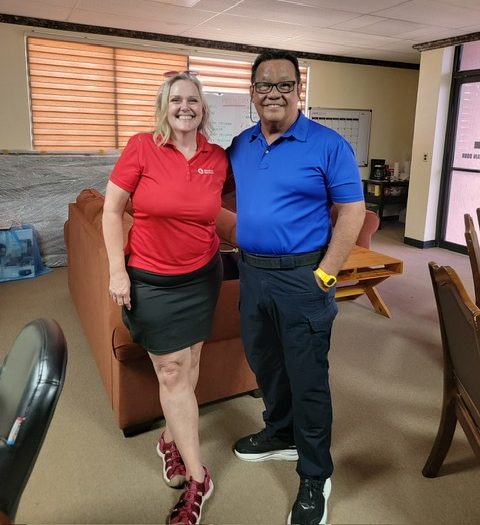
CORRECTION (July 31, 2026): An earlier version of this story incorrectly identified Mayor Camacho of Saipan as former Mayor Carlos Camacho from Guam. The error has been corrected.
In July, I had the privilege of touring the island of Saipan with Mayor Camacho as an Elected Official Liaison (EOL), visiting families whose lives have been deeply affected by Typhoons Sinlaku and Bavi alongside him. As we went from home to home, we listened to their stories, learned about their most pressing needs and witnessed firsthand the remarkable resilience that continues to shine through despite so much loss and uncertainty.
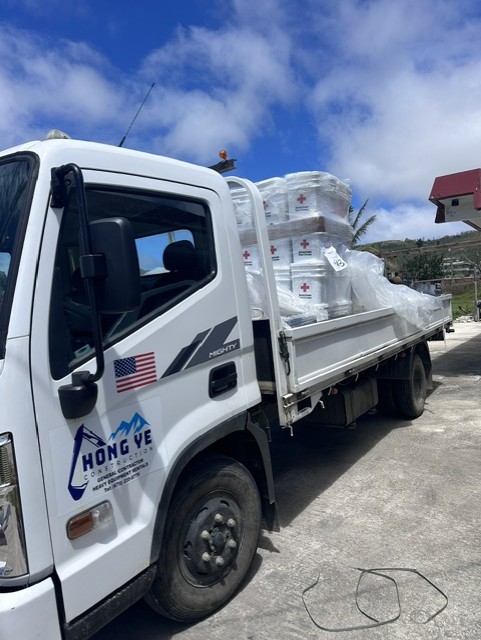
One particularly meaningful moment came when we visited the home of one of the mayor’s staff members. Upon arriving, the mayor learned that our American Red Cross team had just been there, delivering food, water and tarps to support the family’s recovery. Although I had shared details with the mayor about our distribution efforts, seeing the impact firsthand was different. He was genuinely surprised and grateful to learn that help had already reached someone from his own team.
Later, we met up with a crew of Red Cross disaster volunteers out in the field. The mayor took time to personally thank the volunteers for their hard work and dedication. When invited to join them for lunch, he graciously accepted, taking the opportunity to express his appreciation not only to volunteers who had traveled from off-island to help, but also to the local youth volunteers who were stepping up to serve their own communities. It was a powerful reminder that recovery is built through compassion, partnership and people helping people.
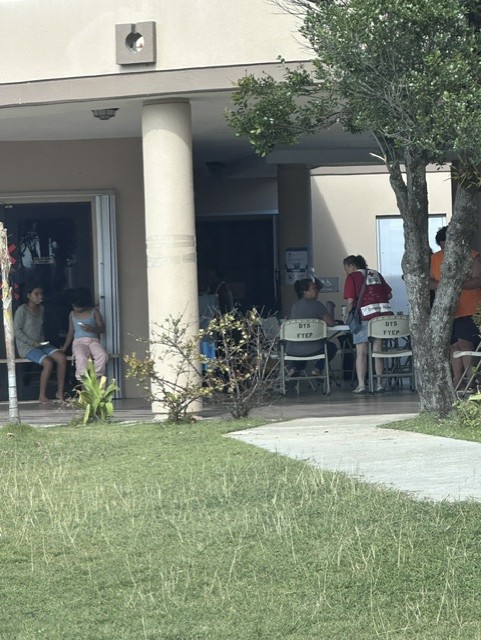
We also visited the shelter, where one of our special residents made a simple request for ice cream. As we started to drive away, Mayor Camacho couldn’t get the request out of his mind… the ice cream. A short time later, we returned to deliver the treats. Not wanting accolades, he sat in his truck watching as shelter residents enjoyed an unexpected moment of joy amid difficult circumstances. It was a small gesture, but one that brought smiles and a sense of normalcy when it was needed most.
Of all the people I met that day, one story continues to stay with me.
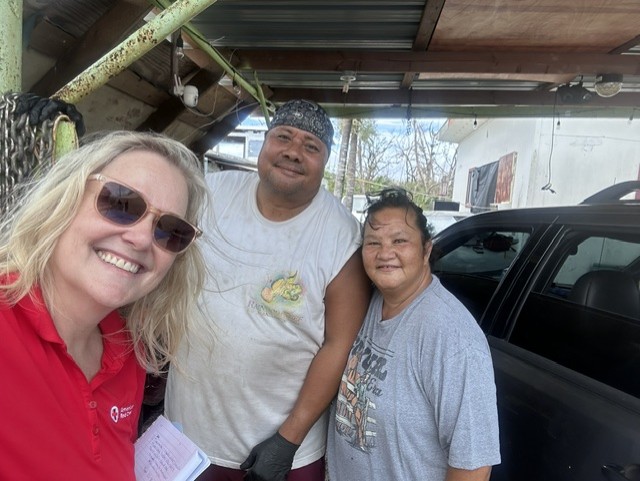
We stopped at a home that, unbeknownst to me at the time, belonged to members of the mayor’s family. I only learned about the connection through conversation. As we talked, they pointed to their modest home and shared that it had been built after the 2018 Typhoon Yutu with the help of the Red Cross. Financial assistance from the Red Cross paid for the foundation, allowing construction to begin while they were still waiting for FEMA assistance. What stood before us was more than a house—it was a testament to recovery and the impact of neighbors helping neighbors.
Then they pointed to the tent we were standing beneath. Only three sides remained, weathered by years of storms and sun. This was the tent their family lived in after Yutu. It was also where the neighborhood gathered then, where neighbors came together after Sinlaku, and where they will undoubtedly gather again after Bavi. When disaster strikes, they send out a call, and people come—not just for food and water, but for comfort, connection and community.
They shared a terrifying memory from Sinlaku. The tidal surge swept into the area with water reaching nearly six feet high. The force of the water pulled their 80-year-old mother from her home. Had family members not acted immediately, grabbing hold of her and pulling her to safety, the sea would have taken her.
Even now, their home bears the scars of that storm. The structure has shifted on its foundation and was further damaged by Bavi, leaving behind mold, mildew and living conditions that are no longer safe. They fear that the house may not survive the next typhoon.
And yet, standing there amid the damage and uncertainty, they laughed. They shared stories. They welcomed me as if I were an old friend. Despite knowing that clean drinking water is precious, they insisted on offering me one of their water bottles. In a place where they had so little, their generosity was abundant.
It was a humbling reminder that resilience is not just about rebuilding homes or restoring roads. It is about the strength of the human spirit—the ability to find gratitude in hardship, laughter in loss and community in the face of uncertainty.
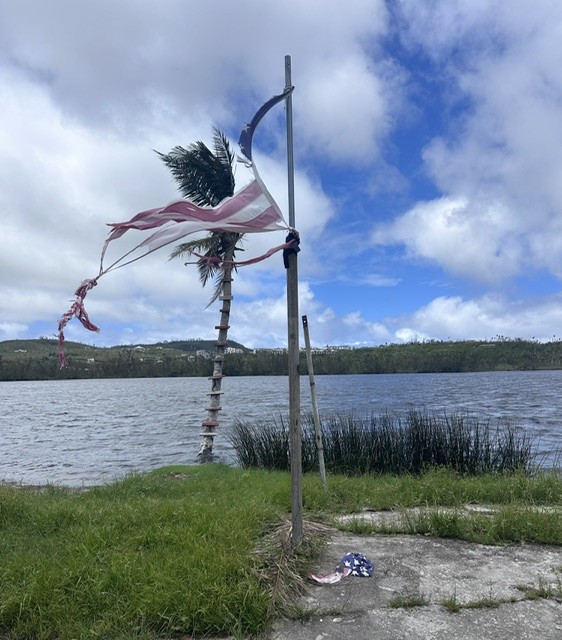
Our final stop was Lau Lau Beach, where the mayor inspected the road that had been washed out during Sinlaku. Repairs had been made, but sadly, the roadway did not withstand the impacts of Bavi and was once again lost to the storm. Standing there served as a sobering reminder of the immense challenges the island still faces—but also of the determination of its people to rebuild, recover and move forward together.

 Your Red Cross Update