Tag Archives: Volunteers

A Welcoming Presence

Ebony Jean Daniel has served as a Red Cross Blood Donor Ambassador – and friendly face – at the Oakland Blood Center for two and a half years, much of that time spent during the COVID-19 pandemic.

“When looking at the good that is done through this role – every two seconds, someone needs blood,” she said. “That’s why I choose to give the time that I have given at the Red Cross, especially during the pandemic. I had the free time and felt that it was worth it to give the hours I give every week – to take the burden off others.”
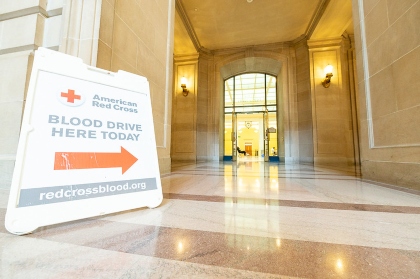
As a Blood Donor Ambassador, Ebony Jean helps donors check in for their appointments, ensures COVID-19 health and safety guidelines are being followed and keeps the waiting area and canteen tidy. Perhaps most importantly, she is a welcoming presence and the first and last person donors see at their appointments, thanking them for their time and their lifesaving gift.

“People don’t really understand how vital blood products are for women giving birth. When people deal with terminal illnesses on a daily basis, the blood products they require are so important. These are some of the multiple different reasons why I chose to volunteer with the Red Cross.”

Prior to the pandemic, Ebony Jean was also a Red Cross Humanitarian Services volunteer, navigating the disaster recovery casework process in order to support families affected by disasters big and small, and helping local youth prepare for emergencies through The Pillowcase Project.

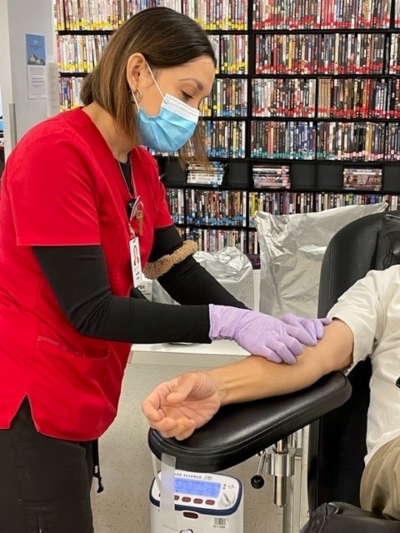
Ebony Jean Daniel, Blood Donor Ambassador at the Red Cross Blood, Platelet and Plasma Donation Center in Oakland.

“Under the umbrella of the Red Cross, there is so much good that takes place,” she said. But eventually, Red Cross Blood Services is where Ebony Jean decided to focus her time and talent.

“As far as Blood Services – people just don’t realize that in the time it takes to snap your fingers, that’s how often people require blood for survival. I never know what could come down the line in my future – I might need to be a recipient someday. We knock on wood that this kind of thing doesn’t happen, but you just never know.”

The Red Cross collects about 40% of the nation’s blood, which is precisely why volunteers like Ebony Jean are so critically important to the overall donation process.

“Looking at the whole picture – coming in, giving my time, taking the burden off other Red Cross workers so they can concentrate on their jobs and we can gather more donations – I focus on customer service, so donors have a pleasant experience. I feel there is a personal obligation, but also it is a pleasant experience for me. I have had a lot of positive interactions, and I definitely enjoy that.”

Thank you, Ebony Jean, for all you’ve done and continue to do for the Red Cross and the community. We are lucky to have you as a volunteer and we know countless blood recipients are grateful for the part you play in the blood donation process.
The Cost of War

Red Cross teen volunteers spread awareness about the impact of armed conflict

By Marcia Antipa

“It’s just better for humanity that everyone knows about it.”

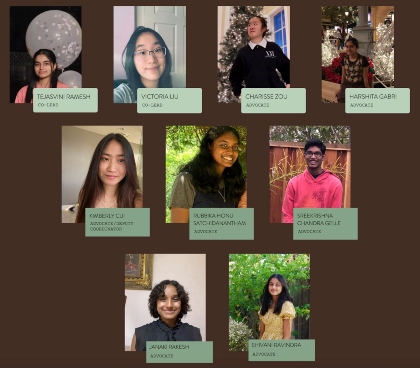
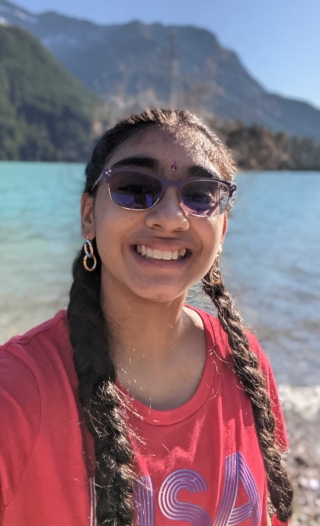
IHL In the Bay, a Youth Action Campaign team from the East Bay.

Bay Area teen Janaki Rakesh is talking about International Humanitarian Law (IHL), a set of rules developed under the Geneva Conventions designed to limit the impacts of armed conflict.

Rakesh and 40 other students in the Northern California Coastal Region are studying IHL through the Red Cross Youth Action Campaign (YAC).   

Kimberly Cui says she signed up for YAC because  “I just wanted to explore more about what other people in the world were facing.”

In past years, the campaign has focused on the effects of war on healthcare workers and on education. This year’s theme is cultural property.

“The destruction of cultural property’s permanent, so when it’s damaged or when it’s destroyed it has a direct impact on that particular community,” says Sarina Vij, Coordinator for the Bay Area YAC.

Vij says cultural property “is something that is of great importance to a particular community. It could be a statue; it could be a monument. “

For example, she cites the Taliban’s destruction in 2001 of two giant Buddha statues in Afghanistan that were 1600 years old.  

Some teens are surprised to learn that the Red Cross is involved in International Humanitarian Law.

Harshita Gabri says, “Initially when I heard about Red Cross I thought of it as an organization that was in charge of blood donations.”

Priyanka Supraja Balaji

“Before I knew anything about the details about Red Cross, I always thought of it as an organization that provides humanitarian aid,” says Priyanka Supraja Balaji. “I wanted to be a part of spreading that mission and really being one of the people who is helping others.”

And Rubikka Satchidanantham says, “I thought this campaign was the perfect opportunity. Not only am I able to learn more about IHL, but I’m also able to educate others.”

Janaki Rakesh said she is passionate about teaching others about IHL, because she has followed the story of Malala Yousafzai. Malala is an outspoken advocate for girls’ education who survived being shot by the Taliban, and won the Nobel Peace Prize at age 17.

“I read all of Malala’s books. She’s a girl from Pakistan. Her life was destroyed by war.”

The YAC teams spread awareness about IHL through Instagram posts and Zoom game nights, where participants answer questions about war and cultural property.

Sreekrishna Gelle posted on the group’s Instagram feed about a firebombing during World War Two, “where American and British bombers basically flattened the entire city of Dresden in Germany which was a center of cultural, architectural and artistic history.”

 “I have never seen a more creative group of individuals,” says Sarina Vij. “They are very good at coming up with different ways to navigate and problem-solve. “

One team held an online scavenger hunt, sharing food, clothing, and souvenirs from other countries. Victoria Liu says that made her appreciate her own Chinese heritage – and what cultural property means to others. “It represents a lot about people and if you destroy these properties, you’re destroying peoples’ identities.”

And the work doesn’t end when the games do. “We used feedback forms and heard back from people that they want to make it more engaging,” says Shivani Ravindra. “So we’re working on improving those for the next event.”

YAC presentations are all virtual for now,  but team member Tejasvini Ramesh says that is their secret weapon.

“We’re able to spread awareness about it a lot quicker than we would through in-person events because with the power of social media we can reach lots of people from different parts of the world.”

Beyond teaching their classmates about IHL, several teens say they find the concepts comforting.

“During war, we think it’s all chaotic,” says Charisse Zou, “but I found it really fascinating how there were actually laws to protect the people and cultural property.”

“It gives me a really safe feeling,” says  Priyanka Supraja Balaji. “Things that have such a personal attachment to you like a place of worship or anything like that won’t get targeted.”

Anyone can learn about IHL and take part in the teams’ online events.  Just visit:

https://ihlinthebay.wixsite.com/ihlinthebay

https://www.redcross.org/humanityinwar/international-humanitarian-law-youth-action-campaign.html

A Day at the San Jose Blood, Platelet and Plasma Donation Center

Story and photos by Alex Keilty/American Red Cross

American Red Cross Blood Donor Ambassador Volunteer Yichen Shi

Our Volunteers

As an American Red Cross Blood Donor Ambassador, Yichen can easily fit volunteering into her schedule as a pre-nursing student. “It’s really flexible and convenient to sign up for the time you want to do it,” she says.

She greets people who arrive to give blood at the Red Cross Blood, Platelet and Plasma Donation Center in San Jose and she keeps the donors’ snack table full of juice and cookies.

For Yichen, volunteering for the Red Cross looks good on her resume, and she also feels good about helping an important cause.

American Red Cross Blood Services Phlebotomist Astrid Savov

Our Staff

“The best part is when donors are happy,” says Astrid as she prepares to collect blood from a donor in San Jose. “When they say, ‘That was painless,’ it feels good.”

As a Red Cross Phlebotomist, Astrid collects blood from donors who visit the blood donation center. She admires those who donate because, as she says, “It’s people trying to do good.”

American Red Cross Blood Donor John Ahn

Our Donors

“I saw in the news that there is a nationwide shortage,” said John, as he gives blood in San Jose recently.

John is right, the Red Cross recently faced its worst shortage in more than a decade. Such bad news is what prompted John to make an appointment to donate.

During his donation appointments, John puts on earphones and enjoys the streamed shows available at the blood donation center.

Join us!

If you are interested in volunteering your time in support of your community, visit redcross.org/volunteer.

If you’re interested in joining the Red Cross – where your career is a force for good – visit redcross.org/careers.

To make an appointment to donate blood, platelets or plasma, use the Red Cross Blood Donor App, visit RedCrossBlood.org or call 1-800-RED CROSS (1-800-733-2767).

Mo Ghandehari – Disaster Action Team Volunteer Extraordinaire

By Larry Dietz

American Red Cross Volunteer Mo Ghandehari is an incredible example of the Red Cross mission – and of the caring and dedicated individuals who do what it takes to accomplish that mission.

Mo started with the Red Cross in 2000, first in Las Vegas, then in Salt Lake City, before moving to California and joining the Silicon Valley Chapter in 2007.

Mo Ghandehari on a Disaster Action Team response.

One of Mo’s first positions as a Red Cross volunteer was on his local Disaster Action Team (DAT). In this role, he responded to the full range of disaster calls ranging from fires in homes, mobile homes, condos, and even a ski resort. He even had the unique experience of responding to a home fire where he and the team installed smoke alarms only a few months earlier.

Red Cross volunteers from the Northern California Coastal Region respond to between 30 and 40 disasters a week where a small handful of local DAT volunteers are some of the first on scene to assist families that have been affected.

The first job of the DAT volunteer on site is to help make the affected residents comfortable and to get them the immediate assistance or materials they might need. This could include simple things like blankets or water. Though, the needs of those affected varies from disaster to disaster, and DAT volunteers also help arrange lodging or financial assistance, which allows families to pay for immediate needs and get back on their feet.

DAT volunteers are also general volunteers and can work in other Red Cross areas. In particular, they can work in their local chapter to perform inventories or make sure that supplies and vehicles are ready to go where they are needed.

There are constant training opportunities for DAT volunteers to learn more about the latest in Red Cross systems, or improve skills with courses like Psychological First Aid: Helping Others in Times of Stress.

DAT volunteers are committed. Many sign up for frequent shifts and are always ready to answer the call, no matter what time of the day or night. When disaster strikes, speed is of the essence, whether it is a major wildfire or a single-family home fire. DAT volunteers have the enthusiasm and confidence to deal with a variety of situations.

Mo advises new DAT members to be proactive in seeking initial training. You can start with your chapter’s DAT lead, or the workforce engagement lead, or the Disaster Program Manager for your area to enroll in training. Though, he says there is no substitute for being on-call and responding.

“It is truly gratifying to help a family that needs a place to stay for a few days, before figuring things out,” he said. “When you are on the scene it is very important to be patient, and respectful of those who were affected and to work closely with your supervisors and managers.”

While the core of being a DAT volunteer is at the local level, there are also many opportunities to expand one’s volunteer career path and deploy to a major disaster as a shelter volunteer as well. It comes as no surprise that Mo has seized many opportunities to deploy and lend his talents across the nation.

When asked about which of his deployments captured the essence of really being on a deployment, he said his time as a shelter supervisor during Hurricane Katrina in 2005 would have to be the one.  It was Mo’s first assignment as a shelter supervisor on a disaster response. The shelter was in an elementary school in Pearl River, Louisiana.

“The experience taught me to treat shelter residents just like you would treat your own house guests,” he said. “Our crew did just that! The shelter experience was a team effort between the Red Cross and local volunteers. They opened and operated this shelter for two to three days, and were exhausted and very happy to see us. Residents had already been pitching in – helping the team to prepare breakfast, cleaning the bathrooms, and doing other chores.  We had no electricity and water for the first few days. The new shelter team, which consisted of four volunteers, plus residents (before others arrived), were literally like a family (the shelter had about 50-80 residents), helping each other to make it through.” 

Not only did Mo develop is shelter management skills and style on this deployment, it also taught him about the satisfaction of serving.

“As I was leaving the job – after two weeks – I noticed a hand-written thank you note on the board, on behalf of the shelter, saying that I provided good care during my two weeks as shelter manager,” he recalls. “This, to me, was heartwarming – a very good rewards for two weeks of hard work.”

When asked about what it takes to be a successful shelter manager, Mo said, “Being compassionate, friendly, and able to relate to people from all walks of life, able to establish trust with supervisors and shelter workers, and being a coach and mentor to other team members.”

Mo is a shining example of a Red Cross volunteer. He has won a number of awards, including the Chapter International Services Award (2021), the Extraordinary Commitment and Dedication Award for Chapter Disaster Cycle Services (2016) and the Chapter Clara Barton Award (2012).

You too can become a Disaster Action Team or Sheltering Volunteer and serve your community in their time of need. Visit redcross.org/volunteer to learn more.

Red Cross volunteer: “This is what we do; we go where we’re needed.” 

Dawson Springs, Kentucky was just one of the communities that was severely damaged by a series of tornadoes that swept through several states on Dec. 11. Photo by Jodi Wallace/American Red Cross

It was Dec. 11, and Jodi Wallace, a 16-year veteran Red Cross volunteer from California’s Silicon Valley chapter, was already tired when she got the call to go to Kentucky after a series of tornadoes had devastated broad swaths of that state.

Wallace, 60, had spent most of August responding to California’s Gold County fires and then moved on to assist with the hurricane response in Louisiana. After that, she had helped with the flood response in Washington state. She had been home for only a little more than a week, ready for a well-deserved break, when the call came in.

She knew the scale of the disaster meant the Red Cross would be needed more than ever, so she asked her husband what he thought. “He always tells me, ‘this is what you trained for,'” Wallace says. He’s even teased her: “Would you like me to pick a better month and schedule a disaster for you?”

Read more

Looking back on 2021

Please join us as we say goodbye to 2021 with a look back at some of our favorite stories of the year from all of our lines of service.

Service to the Armed Forces

Lisa Ann Rohr was one of nine Red Cross SAF Mobile personnel who left the U.S. for overseas duty from August 2020 to April 2021. Lisa Ann was one of two Red Crossers initially stationed in Iraq, at the diplomatic post Baghdad Diplomatic Support Center (BDSC).

She says: “My entire ‘boots on the ground’ experience providing virtual services in Emergency Communications Messaging Delivery and Service Member follow-up with my peers, to creative ‘no contact’ distribution of incoming holiday donations, gifts and personal care items, to organizing cooking classes, language classes, and cultural history classes for U.S. and Coalition military forces serving their deployment rotation at BDSC, was a dream come true!”

You can read more about Lisa’s experiences here.


Lifesaving Blood

Blood donor Jennifer Sahni credits the Red Cross for saving her life after a challenging childbirth. After delivery, Jennifer’s cesarean incision would not stop bleeding. She received two units of blood, which stabilized her. Two days later, she had to receive a second transfusion with an additional two units of blood. She was able to go home the next day.

“I am so grateful to the people who donated the blood I received,” Jennifer said. “Because of them, I was able to go home and be with my kids. You can read more about Jennifer’s story here.


Training Services

On Tuesday, March 16, two local residents were honored with American Red Cross commendations in a virtual ceremony hosted by the organization’s Central Coast Chapter.

“These two individuals exemplify the mission of the Red Cross to prevent and alleviate human suffering in the face of emergencies and are to be commended for their willingness to help others in distress.” – Michele Averill, Executive Director of the American Red Cross Central Coast Chapter. You can read more about Linda and Robert here.


International Services

Red Crossers and the public at large were invited to a speaker series to learn how the American Red Cross International Services team provides relief and hope in communities around the globe by reconnecting families separated by crises, helping rebuild communities devastated by disasters and working alongside health organizations to eliminated global disease. 

Featured panelists included Chris Losavio, Executive Director, Heart of the Valley Chapter American Red Cross Northern California Coastal Region; Patrick Hamilton, Head of Delegation for the United States and Canada International Committee of the Red Cross; Koby J. Langley, Senior Vice President, Service to the Armed Forces and International Services American Red Cross; Christine Medeiros, Pacific Division Lead, Restoring Family Links American Red Cross. You can view a recording of the discussion here.


Disaster Services

Navy veteran Michael Ocaranza awoke earlier this year to flames engulfing his apartment. He had just enough time to grab his dog, Sparky, and race out the door as fire licked around his head.

American Red Cross volunteers and case managers, Betsy Witthohn and Cindy Jones, first contacted Mike during his hospitalization and began to put together resources for his welfare following his stay. During the recovery process, Mike says they became “like friends from the past that I never had before – it’s a good feeling all over.”

You can read more about Mike’s story here.


From all of us in Communications, Happy Holidays and best wishes for the New Year!

If you have a story lead for any one of our writers, please email us at NCCRPublicAffairs@redcross.org.

« Older Entries Recent Entries »