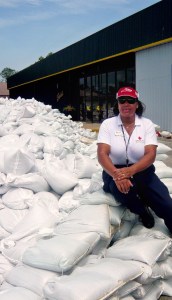
As an American Red Cross volunteer since 2010, Roxanne Anderson has deployed to more than 35 disasters across the continental United States and several island deployments including the islands of Guam in June 2023 and the American Virgin Islands in 2017. She is one of those special volunteers who has, “been there, done that.”
Roxanne has held a wide variety of jobs in her 35+ deployments, including in Georgia following a tornado in May 2011. Photo courtesy Roxanne Anderson
Roxanne, who lives in San Jose, joined the Red Cross after spending 30 years as a California Highway Patrol officer. She’s done a wide array of Red Cross roles, including disaster response feeding, sheltering, managing logistics, driving an emergency response vehicle (ERV), supply and transportation.
States she has been sent to, in addition to her home state of California, include Illinois, Georgia, Missouri, Connecticut, Colorado, Arizona, New Jersey, Washington, North Texas, South Carolina, North Carolina, US Virgin Island, Oklahoma, Florida and Guam. She has responded to floods, hurricanes, wildfires, a gas pipeline explosion and multi-structure fires, tornadoes and mass shootings.
“Being able to make a difference,” is what motivates Tom Tanner, Red Cross Silicon Valley Chapter volunteer and winner of the Regional Excellence in Disaster Services Award.
Tom is one of those unsung heroes who just does what is needed without being asked. Tom’s dedication to the Red Cross evolved from his family and his midwestern values.
“My maternal grandmother was a Red Cross Gray Lady during my youth, possibly even during WWII, who drove more than 60 miles to the nearest Army base to serve the troops and over 100 miles to donate blood regularly. My father’s aunt was also a volunteer in the 1930s, so it runs deep in my family.”
Meet Susanne Newswanger, a Red Cross nurse recently honored with the Clara Barton Award for Meritorious Leadership
Photo courtesy of Susanne Newswanger
Over 13 years with the Red Cross, Susanne Newswanger has demonstrated the essence of being a Red Cross nurse: she cares for people during disasters and emergencies and works hard to ensure the well-being of volunteers, staff and the communities we serve are met.
From her role as the Coordinator of Disaster Health Services in the Silicon Valley Chapter to her current position as the Pacific Division Staff Health Lead, Susanne has been a driving force for recruiting, onboarding and training Disaster Health Service volunteers.
“When I first joined [the Red Cross]in 2009, my primary goal was to deploy to disasters. [In addition,] I also joined the Deployment Team and found great satisfaction in preparing our members to respond to a disaster,” she said.
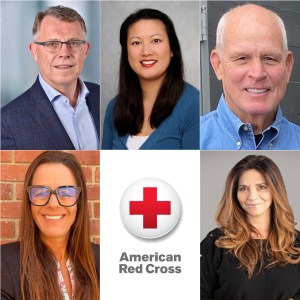
At the heart of the Red Cross’s vast network lies an essential role: that of the Board of Director’s Chair for a local chapter. These individuals play a pivotal part in guiding community leaders and leading their respective chapters to fulfill the organization’s mission to alleviate human suffering.
Our region’s five Chapter Board Chairs share their inspiration for joining the Red Cross below, and the critical responsibilities and significant contributions they hope to make in the community. We thank all our Board Members for their dedication, commitment and impact to ensure the Red Cross remains a beacon of hope and support when it is needed most.
To learn more about our chapters within the Northern California Coastal Region and our Board Members, visit: redcross.org/norcalcoastal
The Volunteer of the Year Award honors individuals who best exemplify the humanitarian spirit of volunteerism.
It’s the highest honor a volunteer can achieve within our chapters, meaning that they made significant contributions to the American Red Cross over the last calendar year. These volunteers worked in multiple roles alongside fellow volunteers and staff, providing support to all lines of service. In short, they exemplify the Red Cross mission, and we are proud to share the 2022 award winners.
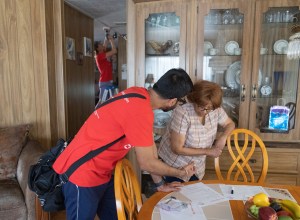
Red Cross volunteer John Gee has installed more than 2,000 free smoke alarms in homes across the region since the launch of the Sound the Alarm campaign in 2014. Photo by Ashish “Ash” Mantri/American Red Cross
Home fires claim seven lives every day in the U.S. and remain one of the most frequent disasters across the region — but having working smoke alarms can cut the risk of death by half. That’s why, over five weekends in April, volunteers with the American Red Cross Northern California Coastal Region, along with local fire departments and community partners, installed 1,294 free smoke alarms and made 462 homes safer as part of the annual Sound the Alarm campaign.
“A working smoke alarm can be the difference between survival and tragedy when a home fire strikes,” said Ana Romero, Red Cross Regional Preparedness Manager. “That’s why the Red Cross is teaming up with community partners to help ensure local residents, especially those most vulnerable, have these lifesaving devices.” Sound the Alarm events are part of the Red Cross Home Fire Campaign which has helped save at least 1,664 lives nationwide since launching in October 2014. Working with local fire departments and community partners, Red Cross volunteers visit high-risk neighborhoods, install free smoke alarms and provide residents with information on common causes of home fires, how to prevent them, what to do if a fire starts and how to create an escape plan.
This work is made possible thanks to generous financial donations from our regional Sound the Alarm campaign partners: Pacific Gas and Electric Company; Arista Networks; CSAA Insurance Group, State Farm; and Gloria and Mike Ipson.
Red Cross volunteers and partners installed 396 free smoke alarms and made 190 homes safer in April across the Bay Area Chapter. More than 500 residents of San Francisco, San Bruno, Brentwood and Hayward are now better prepared to face emergencies after receiving education about home fire prevention.
“Every day, our department sees first-hand the damage and destruction that home fires can have on a community,” said Willie McDonald, Fire Chief for the Alameda County Fire Department. “This is why campaigns, like Sound the Alarm, are so important. A little home fire prevention can go a long way toward keeping families and the community safe, and a smoke alarm is one of the most effective tools we have to do that. We are proud to partner with the Red Cross for this very important event.”
Photo by Nanette Shamieh American Red Cross
Heart of the Valley Chapter
71 homes were made safer in the Heart of the Valley Chapter after two Sound the Alarm events in Stockton and Los Banos.
Red Cross volunteers and community partners installed 169 free smoke alarms and helped 210 residents to create an escape plan and be better prepared in case of a home fire
North Bay Chapter
Photo by Nanette Shamieh American Red Cross
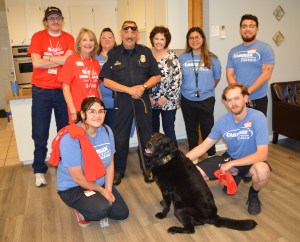
Community partners and Red Crossers installed 354 free smoke alarms and made 116 homes safer in the North Bay Chapter. Over the three events in Sonoma, San Rafael and Vacaville, the teams shared home fire prevention educational information with more than 230 residents to make the community safer.
Captain Drew Kostal and his K-9 “Kepi” from the Vacaville Fire Department attended the installation event on Saturday, April 29. He spoke with the team about the importance of working smoke alarms.
Silicon Valley Chapter
Photo by Atul Trviedi American Red Cross
Red Crossers and community partners gathered at Millpond Mobile Home Park on Saturday, April 29 to install 205 free smoke alarms in 85 homes to make more than 140 residents safer.
Red Cross Board and Tiffany Circle Members participated in Sound the Alarm events across the region to help make their community safer.
Sound the Alarm – Signature Event in Hayward (CA) – April 29, 2023 Photo by Martin Gagliano – American Red Cross






 Your Red Cross Update