In early January, a series of devastating wildfires tore through the Los Angeles metro area, leaving destruction in their wake. The fires, which impacted multiple neighborhoods, resulted in at least 29 deaths, the destruction of over 16,000 structures, and dangerously unhealthy air quality affecting millions. As communities continue to recover from this disaster, businesses and organizations across California have stepped up to provide support.
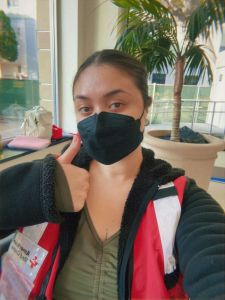
Samantha, Naiel Ammari’s daughter, evacuated from Calabasas during the devasting wildfires.
One such business is Best RV Center, a family-operated dealership located in Turlock, Calif. Established in 1997 by Naiel Ammari and his brother Nazeh, Best RV Center has grown into one of the largest RV dealerships in the region. Situated on 20 acres along Route 99, the dealership boasts an impressive inventory of 1,700 RVs, offering a wide range of models to customers from across the state.
When the wildfires broke out in January, the devastation hit close to home for Naiel. His daughter Samantha, a graduate student at Pepperdine University, was among those affected. Living in Calabasas, she faced difficulties commuting to school due to road closures. With no water or internet access, she and other students found support from the American Red Cross, which provided shelter, clothing, water and essential supplies to those affected by the fires. Pepperdine University was forced to close temporarily, shifting classes online, and Samantha chose to leave the area and drive eight hours back home to Turlock.
Red Crossers surveyed the widespread flooding that left Pajaro underwater, including Joanne’s home (pictured in the distance between the volunteers).
Written by: Jillian Robertson | Senior Manager, Long-Term Recovery Communications, American Red Cross
“People were caught off guard. It was 1 a.m. The levees were breaking, and we were told, ‘You’ve got to go!’ It was very traumatic.”
Joanne Jackson lived with her husband and her daughter in their home in Pajaro, California, before catastrophic floods forced them from their home two years ago, in December 2022.
For Joanne and her husband, they were lucky. The day before, the sheriff had warned them to evacuate. They left in their travel trailer where they’re still living today, as they work on repairs to their home that was rendered uninhabitable by the floods.
In my weekly one-on-one meetings with my supervisor, the question of professional development often arises. Usually, I’d offer a standard answer, something about improving my Excel skills or taking a project management course. Honestly, I hadn’t given it much serious thought. That is, until I said “yes” to a deployment opportunity to help with the disaster response operation for the devastating wildfires in Los Angeles. It was then I realized the Red Cross offers growth opportunities far beyond what I could imagine – opportunities for profound personal and professional development.
“We are so focused on responding and getting a job done, but that isn’t how you touch peoples’ lives. You do that by listening to them, talking to them, letting them tell their story and finding out what they need. Then you help them,” is a sentiment that has guided Briana Taylor, first by a career in psychology, and later by two decades of service with the American Red Cross.
Briana’s introduction to disaster response was happenstance. In her professional role in mental health, Briana had spent many years working to alleviate human suffering on an individual level, tending to the needs of her patients in their darkest hour. In 2004, Briana was vacationing in Phuket, Thailand with her family, briefly taking off her psychologist hat, when a tsunami took to the island’s shores. Six weeks later, her drive to alleviate suffering took flight on the community-level, as she returned to Thailand to support islanders in their recovery.
Recognizing Susan Winters, Heart of the Valley Chapter’s Clara Barton Award Winner
By Selena Nisha
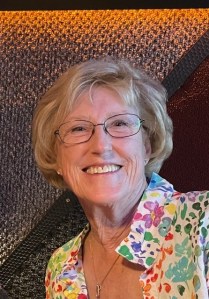
Photo courtesy of Susan Winters
After retiring from a career as a speech therapist and school secretary, Susan Winters from Modesto, California found herself searching for new ways to stay engaged in her community. Susan has always believed in the importance of giving back. Her parents were active in community service and instilled in her the values of volunteerism and compassion towards others. This passion for service led her to the American Red Cross in 2010, and her contribution to the organization was recently recognized with the Clara Barton Award for Meritorious Leadership. Named after the founder of the Red Cross, the award recognizes a volunteer for their years of service in various leadership positions.
“I was born to help people. That’s what brings me the most joy.” Caro (Carolina) Dratva, a Red Cross Northern California Coastal Region’s Disaster Cycle Services Team member and Communications volunteer, heard the call to help others early. When she was 12 and still living in Colombia, a volcanic eruption buried a close friend’s hometown, Armero. “I could only watch TV, listen to the radio, and follow up with my friend,” whose parents had died in the disaster with 23,000 others. Responders with the Red Cross emblem arrived to rescue victims and remove debris during an operation that she would remember later when, at age 15, she noticed the same emblem among response teams in San Francisco in the aftermath of the Loma Prieta earthquake, which she witnessed. At that time, she revealed, “I didn’t realize that the Red Cross was mainly run by volunteers.” It was only after she asked how much responders were paid that she understood that most rescuers offered their unpaid time and effort to save others, a fact that must have deeply moved this scuba diver, surfer, conservationist, and explorer to dive deep and dedicate more than two decades to volunteering.
After all, when Caro set off for the Bahamas several years ago on a dolphin trip with her closest friend, she couldn’t have predicted that her life would be deeply impacted again. “During the night,” she recently shared, “I went to swim with dolphins 85 miles out on a boat. We were anchored, and I was the only one swimming. Everyone else was on the boat. So, I went off with the dolphins. There was a full moon, and I lost my sense of direction. But because of the moonlight reflecting on the water, I couldn’t find the boat. I couldn’t see it. For the first time, I felt panic, like, ‘I’m going to die here.’ But the dolphins were still hanging with me. So, I literally spoke to them: ‘Could you please bring me back to the boat.’ And then, one pushed me on one side, the other pushed me on the other, and they brought me right back to the boat.’” This profound moment of trust and connection with the dolphins helped her realize the power of relying on others during moments of crisis. Just as the dolphins guided her to safety, Caro felt compelled to help guide others through challenging times, which ultimately led her to dedicate her time to lifesaving organizations such as the American Red Cross.
Photos courtesy of Caro Dratva
“There has to be a way that I can volunteer.” The real work began with 9/11, when the Twin Towers came down in Manhattan’s Battery. She needed to help, so she joined the Red Cross. “I thought, if I have to deploy to New York, I’ll do it. But then, I realized I needed training.” Getting that training during such a fraught time for the country and those who’d lost loved ones required sensitivity and an ability to ask the right questions.
“My first training was in San Francisco,” she recalled, “connecting the missing people on lists with their families.” Mainly, she conducted interviews meant for search and rescue teams, gathering descriptions of missing people, noting the floors they worked on and what they were wearing the last time they were seen. Even now, twenty-two years later, Caro remembers one moving experience when she used her native language skills to search for a distraught woman’s husband who’d worked in the Towers. “She spoke Spanish, and the good news was that the woman’s husband was alive and able to reconnect with her.”
Later, after a one-year hiatus in Europe, she continued to dedicate herself to helping others, getting involved in Red Cross blood drives, donation collection campaigns, and numerous disaster relief operations, including the aftermath of Hurricane Katrina.
Caro and Red Cross Volunteers supporting communities affected by wildfires in North Bay, 2017
Since then, Caro has watched the Red Cross grow even more effective, learning from hard knocks like Katrina. Better organizational tools have improved efficiency before, during, and after disasters, allowing volunteers like her to give time even when time is sometimes hard to spare. Holding down two jobs—one focused on ocean conservation and the other on architectural design—Caro still finds time to volunteer in numerous ways. “Because of good organization and how the Red Cross has grown, I can be on standby for the Disaster Action Team (DAT). I’m also trained for sheltering, and I’m part of the Public Affairs and Communications team.”
All this volunteering has added up over the years. From one training session to another, Caro has developed expertise through online and real-world experience. With every exposure she’s had to disasters, shelters, and blood drives, she has noticed, listened to, and recognized others as they face some of the most challenging moments of their lives. This may be one reason why she still swims for life, giving a great gift to others along the way: how to save others while saving oneself.