Category Archives: Homepage Posts — Other

DAT Duty Officer Nik Rochnik Answers the Call to Help and Encourages Others to Join the Line

By Lindsay R. Peak

Nik Rochnik helping those affected by Hurricane Ian at the Red Cross office in Daytona Beach, Florida.
Photo courtesy of Nick Rochnik

Rain or shine. Morning or night. From floods to fires, the Red Cross Disaster Action Team (DAT) volunteers answer the call for help 24 hours a day. And, for some, they discover their own calling. Meet Nik Rochnik.

Born in Ukraine, he immigrated to the United States for collegiate studies in Boston before making the Bay Area his home. This husband and father of two children and one dog felt the urge to connect with his neighbors by donating what little free time he could find to assist others in times of crisis despite having a full-time job in computer software.

“I joined Red Cross looking for opportunities to directly help people in the community,” says Rochnik. After researching various organizations, his search ended at the Red Cross website. “I was very impressed with Red Cross 100% disaster response coverage and the efficiency of how much donor’s funds are distributed to clients,” he relives.

Nik joined DAT as a trainee a little over six months ago. His hands-on involvement started almost immediately. With unprecedented rainstorms, his boots hit the ground post-training working in emergency shelters and traveling across state lines aiding those in need in their recovery. After four local DAT calls, Nik was deployed in December of 2022 to Hurricane Ian in Florida. He was tasked with registratio onsite as well as on mobile outreach at that Disaster Response Operation (DRO). The most satisfying days were processing high quantities of assistance cards for the people we serve.

“The reactions and interactions are very memorable. They say thank you in different ways. There are tears and hugs, but many times it’s just words that imprint volunteer’s minds and hearts,” he adds.

Learning of folks’s plans for utilizing funds also left a lasting impression on Nik. “I think of myself as a tough guy, but when I think of these things, I choke up a bit,” shares the volunteer. A grandmother shared her intent to use the assistance monies to buy bunkbeds so that her grandkids wouldn’t have to sleep on the floor any longer. A disabled veteran planned to purchase a new scooter to replace the one he lost in a fire allowing him to regain his mobility.

Red Cross’s high percentage of donor funds distributed to the people who needs it most and the opportunity to assist in times of need pulled Nik in. And, he plans to stay hoping to recruit others. Nik has plans to use vacation time to do at least one DRO per year until he retirement frees up his schedule. Future goals include assisting in potential improvements to Red Cross processes and technology, answering DAT calls and responding to DROs.

This mentor keeps motivating prospective and current volunteers. Through personal assessment of one’s own skillset and individual strengths, anyone can add to Red Cross’ functions. “I see it as continuous learning.” His wheels are always turning and finding ways to maximize value to the organization through volunteer work. Now, Nik has advanced to Duty Officer answering the calls from client’s in need and directing responders to the scene.

Every eight minutes, the Red Cross responds to a disaster. Whether it’s being an ear to listen, a shoulder to cry on, or a friendly face who aids in meeting immediate needs for shelter or supplies, volunteers ensure during times of crisis, someone will be on the other end of the call for help.

If you are bilingual, empathetic, goal oriented, or have availability or flexibility in your schedule, consider joining the DAT team. Training is online and in-person. The Red Cross can use your skills and compassion, either on the scene, or coordinating remotely.

Visit redcross.org/volunteer/disaster-action-team to find volunteer opportunities in your area and apply now.

From Donor to Distribution: A trip through the blood lab

The request arrives from a local Kaiser Permanente hospital just before lunch: a patient needs platelets STAT! “Stat” means immediately; if you watch hospital dramas, you might already know that. But this is no fictional TV show, it’s a real assignment for Nataly Breisath, a Hospital Services Tech in the American Red Cross blood lab in San José.

Nataly Breisath prepares a unit of platelets. Photo by Alex Keilty/American Red Cross.

Nataly grabs a clear bag of the yellowish platelets from the agitator – a machine whose shelves slide back and forth constantly to keep the platelets full of oxygen. She packs the bag into a box bearing the Red Cross logo and marked “Rush: Keep at Room Temperature.” It will be driven to the hospital immediately.

Although the order form doesn’t say who the patient is or why they need platelets, that component of blood can be essential to surviving surgeries, fighting cancer, chronic diseases and traumatic injuries.

Is it stressful for Nataly fulfilling orders for blood products from local hospitals?

Once an order for blood products comes in to the lab, techs like Nataly Breisath carefully pack them for delivery. Photo by Alex Keilty/American Red Cross.

“There is usually some amount of pressure (and a little anxiety),” she says. “Even more so with stat orders.”

The most challenging ones are when orders for a massive transfusion protocol come into the lab – when a patient needs approximately 10 units of blood within 24 hours – which is roughly equivalent to the volume of blood in an average adult. It can be tough hearing details later on the news about a tragedy and figuring out that is what led to the transfusion. But Nataly says she is glad she can “possibly save their life and help with recovery.”

Although Nataly doesn’t meet the patients who receive the blood she prepares at the lab, she does know someone personally whose life was saved by blood donations, someone who had a “significant need after giving birth.” So Nataly knows for sure that giving blood saves lives.

Before blood can get to a hospital patient from a Red Cross lab it needs to undergo many steps:

Red blood cells are stored in special refrigerators for up to 42 days. Photo by Alex Keilty/American Red Cross.
  1. The donation: People go to a donation center to give blood.
  2. Processing: After giving blood at a local drive, it is packed on ice and taken to a blood manufacturing laboratory where it can be separated it into transfusable components, such as red blood cells, platelets and plasma.
  3. Testing: As the donation is processed, test tubes with blood samples that were taken at the time of donation go to a testing laboratory where a dozen tests are performed to determine the donor’s blood type and check for infectious diseases. These results are transferred to the processing center. If any diseases are found, the donor will be notified and the blood is discarded.
  4. Storage: Once testing is complete, the processed donation will be labelled and stored. Red cells are stored in special refrigerators for up to 42 days; platelets are stored at room temperature for up to five days while being continuously agitated to prevent them from clumping together; and plasma can be stored in freezers for up to one year.
  5. Distribution: Hospitals keep some blood products on their shelves, but the Red Cross is on standby to replenish those supplies and respond in case of an emergency.

Learn more about the blood donation journey: https://www.redcrossblood.org/donate-blood/blood-donation-process/what-happens-to-donated-blood.html

Story, reporting and photos by Alex Keilty

Red Cross and community help RV park residents recover from flood waters

Even before an American Red Cross emergency response vehicle dropped off 100 meals at the Mission Farm RV Park in San Juan Bautista on March 21, eager residents lined up for lunch, happy to get some fuel for the difficult job of trying to clean up the damage done by flooding to their community 11 days earlier. 

Mission Farm RV Park homeowner, Kerry Dickie, thanks American Red Cross volunteers for the cleanup kits and food delivered to his neighbors. Photo by Jaka Vinsek/American Red Cross

Kerry Dickie was among them. Dickie said he lost his mobile home and about 70 percent of his possessions to the flooding and mud that followed. Dickie said that even before waters from several adjacent creeks and a nearby subdivision’s retention pond started pouring into the park, he and his son found their way out was blocked by flooded streets strewn with large underwater rocks.  

As water started to come in, the two tried to move his collections from an enclosed porch into his 1986 Avion mobile home. By the time they got everything into the mobile home, water was knee high.  

The two took one of their vehicles to dry land but by the time they came back to move the other, water had already crept inside the mobile home.  

While the water receded within about 24 hours, when Dickie returned home, he found 1.5 feet of standing water inside. The enclosed porch was totaled as is his mobile home.  

“It’s just a horrible muddy mess,” Dickie said.  

Red Cross volunteer Roberta Jones and Leslie Jordan, mayor of San Juan Bautista, unload meals for residents of the Mission Farm RV Park. Photo by Barbara Wood/American Red Cross

“I’m kind of wondering what my next house is going to look like because this one’s not habitable any more,” Dickie said. He said he will probably look for a used mobile home to replace the one destroyed by the water.  

He’s not one to take handouts, Dickie said, but “when you need help, you need help.”  

Residents of the park have been helping each other recover from the flooding, which affected some of the recreational vehicles more than others. Kurt Kurasaki, whose father built the park in the 70s, says he tried to come out to assess the storm damage on March 10th, but couldn’t get through the flooded roads. When he trudged in through the water he saw the berm he had built to raise the heights of a nearby creek bed by a foot was about to be overtopped. Kurasaki started going door to door telling residents of the 70 recreational vehicles and mobile homes on the property to evacuate.  

Kerry Dickie thanks Red Cross volunteers Mary Marcus and Hideaki Yamazaki for the cleanup kits. Photo by Jaka Vinsek/American Red Cross

Not everyone left. Some people were at work, Kurasaki says, some “opted to ride it out” and some didn’t have a vehicle to get out with.  

Kurasaki said the park had flooded once before, but it was two decades ago.  

Now, those who had less damage are helping those with more damage to remove their trashed belongings.  

Leslie Jordan, the mayor of San Juan Bautista, and other volunteers came in Tuesday and Wednesday to help serve the food and promised to come back as long as the deliveries lasted. Earlier in the week, more San Juan Bautista residents came out for a work party to help their flooded neighbors.  

“This is our community,” Jordan said. 

When Home is a Parking Lot 

Red Cross Volunteers Bring Hot Meals to RV Campers  
Dave Martin gets hot meals from Red Cross volunteers. Photo by Marcia Antipa/American Red Cross


“They tell you to get out and that’s it.” 

Dave Martin and a few dozen other RV Campers have sought refuge in a rain-drenched parking lot in Hollister during the recent California storms.  All of them were forced to evacuate RV campgrounds in the area when the floodwaters rose and threatened to swamp their vehicles. 

Robin Lewis also brought his camper to this lot after a harrowing few days seeking a safe haven. 

“We stayed by the side of the road for a few days, went to another place, came here, and we’re worried about where we’re going to head to next.” 

Mario Garcia at the Red Cross response vehicle. Photo by Marcia Antipa

Then, the American Red Cross arrived with hot food and two friendly faces:  volunteers Roberta Jones of Silver Creek, Washington, and Felix Rodriguez of Madera, California.  The two dished out meals, snacks and bottled water from inside an Emergency Response Vehicle.   

“It’s great,” said Robin Lewis after picking up a few meals. “There’s a need for help here, not just us, there’s a lot of people. We’re way better off than a lot of people, for sure.” 

Red Cross volunteer Roberta Jones. Photo by Marcia Antipa

Camper Mario Garcia accepted his meals with a big smile, and brought food to another camper, who he said was too shy to accept food. Mario says he makes the most of what could be a dreary experience. He even plans to attend a “Learn to Salsa Dance” event at a Hollister dance club. 

Volunteers Roberta Jones and Felix Rodriguez get a little choked up when asked why they volunteer with the Red Cross during a disaster. The reason, Jones says, is simple. 

“The people. Everyone is so grateful, and that’s why I do this, because they are just so grateful. Don’t make me cry,” she says, laughing. 

The Red Cross needs more volunteers like Roberta and Felix. If you would like to help, please visit redcross.org/volunteer

Prepare with Pedro: A fun way to build resilient and aware young students

Everyone in the family can have an active role in household safety. Prepare with Pedro and The Pillowcase Project – the two American Red Cross educational programs for kindergarten through 5th grade learners – help young students stay safe in case of an emergency.

Zeien Cheung, Red Cross Regional Preparedness Lead – Prepare with Pedro Program, posing next to
Pedro the Penguin.
Photo courtesy of Zeien Cheung

Fire experts agree that people may have as few as two minutes to safely escape a burning home before it’s too late. This short amount of time is frightening for adults and can be traumatic for children.
To help everyone in the household learn how to stay safe before, during, and after an emergency, the Red Cross has created The Pillowcase Project and Prepare with Pedro, two classroom-based programs designed to teach preparedness to students. Prepare with Pedro is designed for kindergartners through second graders, while The Pillowcase Project is geared toward third through fifth graders.

“These programs teach (students) how to act, help them understand what is happening around (them) during an emergency and give them some control over a stressful situation, even when there is not much control possible,” said Ana Romero, Regional Preparedness Manager for the Northern California Coastal Region of the red Cross.

Prepare with Pedro is a 30-to-45-minute storytelling-based presentation designed for students in kindergarten – second grade. Specially-trained Red Cross volunteers visit classrooms and introduce Pedro the Penguin to young students. Reading about Pedro’s adventures in storybooks and with the help of some training exercises, school kids can learn basic preparedness concepts like what a smoke alarm sounds like, what’s important to remember in case of a home fire, protecting themselves during an earthquake, practicing deep breathing to remain calm during an emergency, or how to talk with adults about their feelings after a stressful experience.

Romero explains that the focus of Prepare with Pedro is to build more resilient kids.

“Pedro helps children to develop stronger coping skills. They learn how to manage stress not only during emergencies, but also in their everyday life,” she said. “I was presenting the program in a local school recently when I asked the students if they think that these relaxation techniques, these coping skills, could be applied in some other challenging situations in everyday life, besides an emergency. One of them immediately raised his hand and replied, ‘when we get a vaccine shot!’ and yes, he was right. Those skills are useful in everyday life and the objective of Prepare with Pedro is to build resilient kids prepared to face any unexpected situation.”

Zeien Cheung is the Regional Preparedness Lead for the Prepare with Pedro program, and has been a Red Cross volunteer since 2018. She started her Red Cross journey as a member of the Disaster Cycle Services team helping with the response to the Napa wildfires, but then realized teaching preparedness was a better fit for her. Always passionate about teaching and working with young students, she has vast experience presenting these programs at schools in the Bay Area Chapter. “I believe in equipping young students with knowledge,” she said. “Make them aware of how important preparedness is and how useful learning these things can be.”

The most challenging aspect of presenting these programs, according to Cheung, is capturing the students’ attention. In her role, she oversees volunteers who present these programs at schools and emphasizes that being both a good narrator and able to engage with them are the keys to success.

“Prepare with Pedro is perhaps less involved than The Pillowcase Project, because the students are younger and the activities you can do with them in the classroom are different. But that doesn’t mean that can’t be fun and interactive. I have a Pedro the Penguin stuffed toy that comes with me every time I visit a classroom and the kids love it. It’s an excellent way to connect with them. They ask all kinds of questions about him – where does he live, how old he is, who are his friends – they talk with him and I talk with all of them, using those answers to complement the preparedness knowledge,” Cheung said.

After the presentation, students and their families can continue learning about emergency preparedness through the Prepare with Pedro storybooks, videos and other free resources available for digital download in English and Spanish. There is also a Pedro Fire Safety Challenge for Google Assistant and Alexa-enabled Devices.

“Storybooks and online resources make the children realize that they can have an active role in household safety. Grown-ups at home may not know or not remember how to stay safe during an emergency. We encourage young students to teach others what they learn after Pedro visits their classroom,” Cheung said.

The Red Cross has preparedness programs for all ages: Prepare with Pedro and The Pillowcase Project are for school-aged students and the Be Red Cross Ready presentation is geared toward teens and adults. You can learn more about how to stay safe during emergencies here, or you can sign up to volunteer with the Red Cross and be a preparedness presenter here.

“A Sweet and Honorable Legacy”

How the tragic loss of their daughter inspired Dennis and Virgie Roy to volunteer for the Red Cross

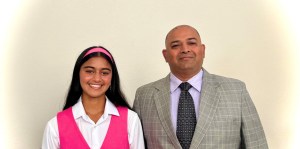
The Roy Family

“I feel so grateful and blessed that God gave us a daughter like that, so I said I will continue what she started.  She had a big heart.”

Virgie Roy is talking about her daughter, Patricia.  On August 4, 2017, just three days after her 22nd birthday, Patricia Roy died in a car accident.  An Airman First Class and Cargo Specialist at Travis Air Force Base, Patricia had plans to become a nurse, following in her mother’s footsteps.

Virgie and Dennis Roy say their daughter was a leader and a shining light in her workplace, the 60th Aerial Port Squadron (APS).

“Every time I would visit her workplace, her colleagues would say, ‘Oh we haven’t seen your daughter angry,’” says Virgie.  “She’s always smiling, even if she’s busy and then if there’s a staff who is not happy, my daughter would just approach her and say ‘are you ok?  Do you need some prayers?’“

Dennis Roy says those memories of his daughter prompted him to sign up to volunteer for the Red Cross in 2020.

Dennis Roy on assignment with the Red Cross.
Photo courtesy of Dennis Roy

“I got inspired by a lot of testimonies coming from the colleagues of Patricia, those virtues of being kind-hearted, service-oriented.”

The Roy family came to the United States from the Philippines in 2014, when Virgie was accepted into a program for foreign-trained nurses.

They were excited for their daughter and two sons to grow up in the U.S.

For Virgie, becoming a nurse was a natural step.  Her mother is a doctor in the Philippines, and a Red Cross volunteer.  Virgie worked in her mother’s medical clinic and joined in those volunteer missions.

“Since grade school, high school, I was already involved in this,” laughs Virgie.  “I’m holding the first aid kit (laughing), I’m doing the vital signs, I was young then but I could do some of the easy jobs.”

Now, Virgie works in the Surgery Center at David Grant Medical Center at Travis Air Force Base in Fairfield, California. 

“The 60th APS, the squadron of my daughter, became our second family.  So I said I think it will give me comfort if I can see some of her colleagues.”

Dennis works in a skilled nursing facility, supervising the clinical documentation, and assisting the Director of Nursing.  He also donates his time to the Red Cross.

“When we came here in the U.S. our orientation was mainly focused on material opportunities, which is basically human nature.  We wanted to have a house like this, we wanted travel, we wanted to acquire cars, etc.” 

He says the loss of his daughter changed his perspective.

“It made me think to follow that kind of legacy, I should probably give back to communities that have given us so much.”

Last year, Virgie joined Dennis in volunteering for the Red Cross. This year, she walked in the Veterans Day Parade in Fairfield, handing out thank you cards to veterans.

Virgie Roy (right) with Red Cross Regional Service to the Armed Forces Director Nikki Rowe at San Francisco Fleet Week in October 2022.
Photo by Nanette Shamieh/American Red Cross

“It’s really heart-warming.  I was smiling all throughout, waving and saying ‘thank you for your service, sir,’ and you know, you can see their smiles, they’re also very happy that we appreciate their service.”

Dennis and Virgie both also volunteered with the Red Cross during San Francisco’s Fleet Week in 2022, demonstrating CPR and basic life support.  They’ve also helped out at the Air Show at Travis AFB.  Now, they’ve become informal “recruiters,” encouraging others to join the Red Cross:

“Some of my colleagues at work want to volunteer with the Red Cross.  You know, when you post something on Facebook and they see your pictures, they say, ‘hey, how did you do that?’  So we tell them, you simply go to the Red Cross website and register yourself.  It’s easy!”

Now Dennis is applying to nursing school in his daughter’s memory.

“Her hard work and sacrifices really inspired me to push through in pursuing her aspirations.”

The Roys also volunteer with the Red Cross Service to the Armed Forces team at Travis AFB, where they feel a special connection.  Every year, they celebrate Patricia’s birthday with her former squadron, and this year, the base named the lobby of the 60th APS Squadron The Patricia Roy Memorial Gateway.

“We are so extremely grateful for all these wonderful opportunities that Red Cross has given to us,” says Dennis, “and for being able to pursue a kind of sweet and honorable legacy of doing service for our community members.”

« Older Entries Recent Entries »