Earth Day, Then and Now: Finding Hope on the Frontlines of a Climate Crisis
By Dej Knuckey
On the first Earth Day in 1970, twenty million Americans gathered to protest pollution and industrial waste. No one was using the term “climate crisis” yet, but the biggest pollutants of all—greenhouse gases—were just beginning to take their toll.
Since then, the concentration of carbon dioxide in the atmosphere has risen from 325 to 430 parts per million, a powerful measure of how much the climate has changed in just over five decades.
Now we see the effects every day: The American Red Cross is responding to nearly twice as many large disasters as it did a decade ago.
A New Era of Consistent and Extreme Events
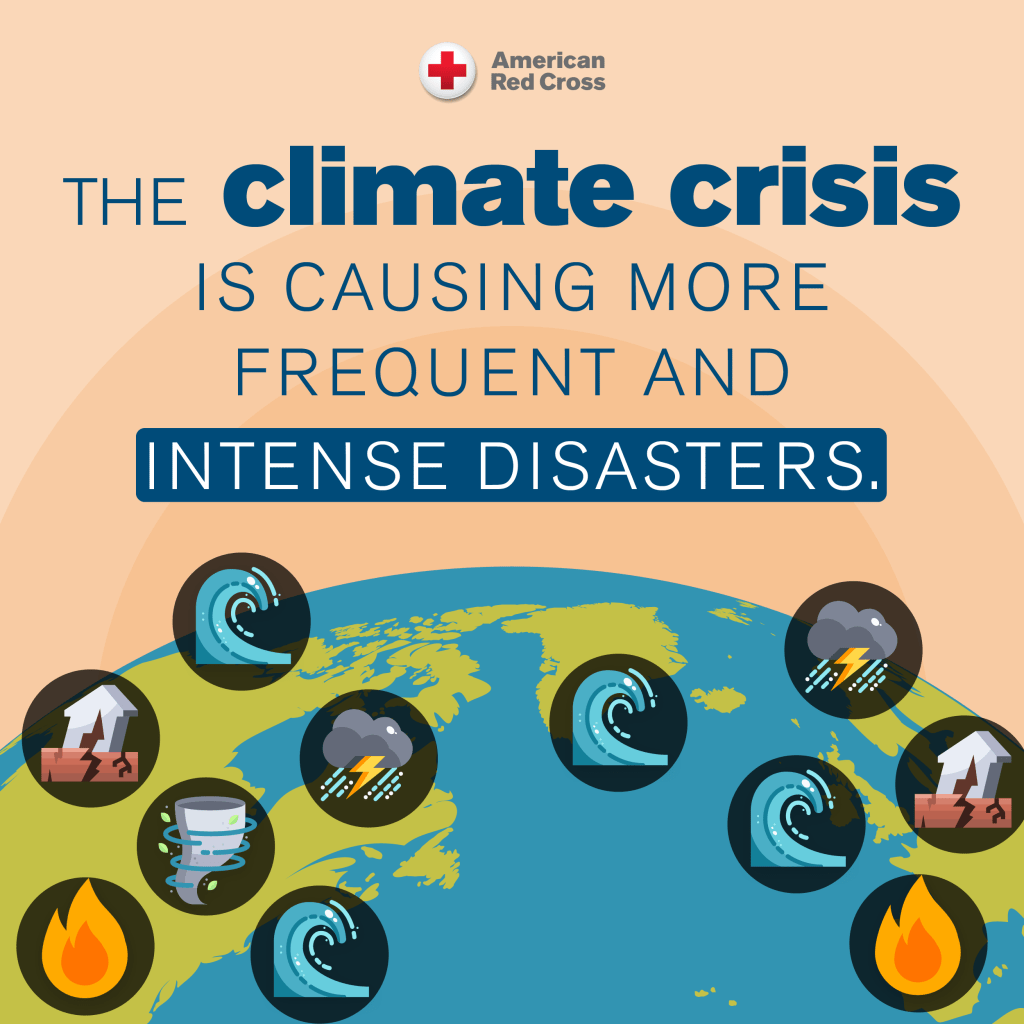
The trend is undeniable: extreme weather events are more frequent and more intense.
Locally, the Northern California Coastal Region has had to open cooling shelters in response to heat waves that strain both the human body and the systems we rely on. We’ve responded to multiple atmospheric rivers that have caused more floods, overwhelming infrastructure and displacing families. We no longer have a wildfire season; instead, we are anticipating year-round fires that move faster and burn hotter. Even gradual changes like rising sea levels are increasing risk. Sea levels have already risen eight to nine inches since the late 1800s, raising the baseline for storm surge, coastal flooding, and landslides.
The kicker is these changes compound, overlap and amplify each other. Heavy rains spur vegetation growth, then heat waves dry it, making fuel for wildfires, and then, when heavy rains hit wildfire-scarred land, mudslides cause further damage. The range and interrelationship of the risks make disasters more likely and recovery more challenging.
The Human Side of the Climate Crisis
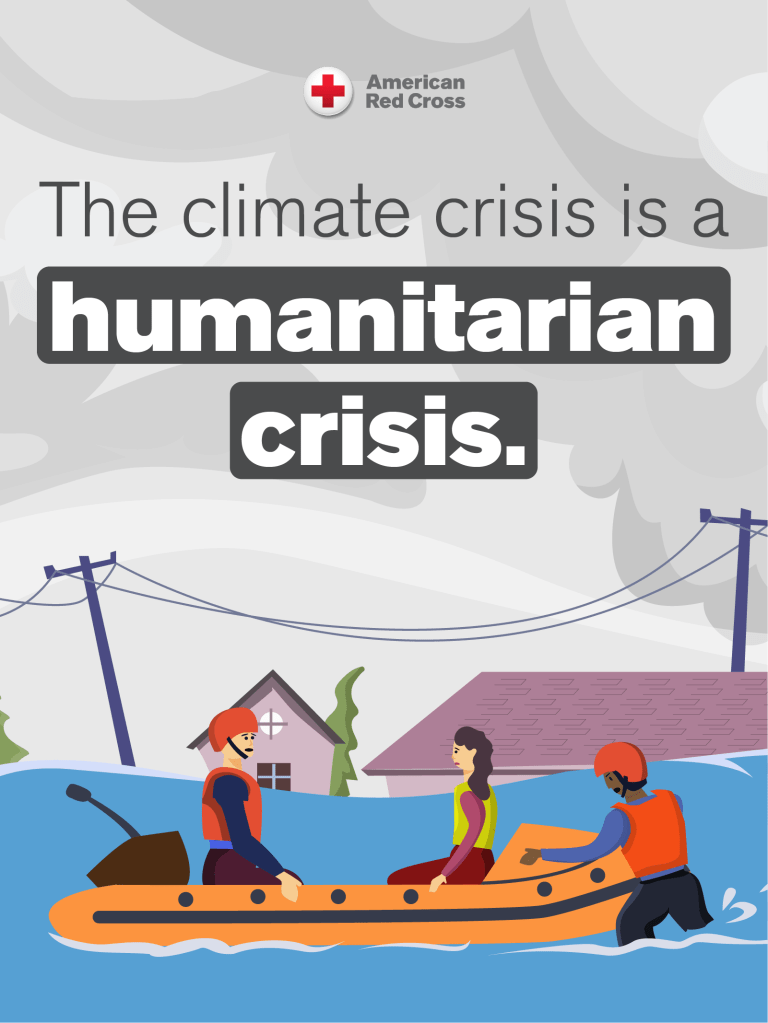
For the Red Cross, the climate crisis isn’t just an environmental issue; it’s a humanitarian one.
Behind every statistic is a person, like a family displaced from their home after a wildfire, an older adult struggling through a prolonged heat wave, or a community rebuilding after repeated flooding.
And those impacts aren’t evenly distributed. Communities already facing economic, health-related or geographic challenges often feel the effects most deeply and take the longest to recover. So, the Red Cross is doubling down to help ensure no one faces a crisis alone.
On the Frontlines of Response
With more than 140 years of experience responding to disasters, the organization has adapted to meet this new reality.
Today, that work includes:
- Emergency sheltering when people are forced to leave their homes,
- Meals and relief supplies for families in the immediate aftermath,
- Health, mental health, and spiritual care for those who need it,
- Financial assistance to help bridge the gap to recovery,
- Casework support to guide people through the complex path of rebuilding.
The Red Cross is also strengthening partnerships with local organizations focused on health, housing and food security, because recovery doesn’t happen in isolation.
And increasingly, the work is global.
Recent events like the devastating typhoon that hit Guam and the Mariana Islands are a reminder that climate-driven disasters don’t respect borders. As American Red Cross volunteers deploy to support local recovery efforts in Guam, including six volunteers from our region, they become part of a worldwide network helping communities face similar challenges.
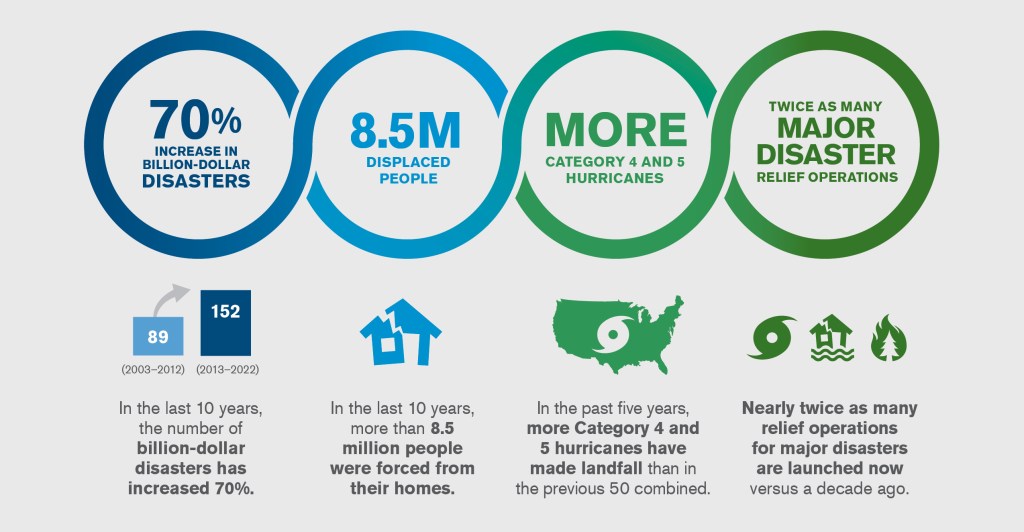
What’s Changed?
As a journalist who’s attended global climate conferences, reported on studies by government and private organizations, and worked inside the climate solutions space for decades, I’ve seen the debate move from whether and why the climate crisis is happening, to how fast and how do we respond. Weather has always been complex, and while no single disaster has a single cause, the background climate conditions have changed.
Human activities—especially the burning of fossil fuels and the rise of industrial agriculture—have added heat-trapping gases to the atmosphere. That extra heat doesn’t just make average temperatures rise; it disrupts the systems that shape our weather, causing more extremes of all sorts.
As a result, the Red Cross has taken preventative action through internal initiatives like local “green teams” to cut our carbon emissions, lower our water consumption, reduce our waste, and build a sustainable supply management system. Thanks to our regional “green teams”, we have received Green Certifications or are in the process of receiving certification for our fixed office sites across the region.
Preparing for What’s Ahead
Since that first Earth Day in 1970, the scale of the challenge has grown. The Red Cross stands on the front lines of the climate crisis, and our capacity to respond needs to keep pace.
Yet response alone isn’t enough.
The Red Cross is expanding its disaster workforce, improving technology for faster, more coordinated response, supporting communities before disasters strike, and integrating climate considerations into long-term recovery plans to.
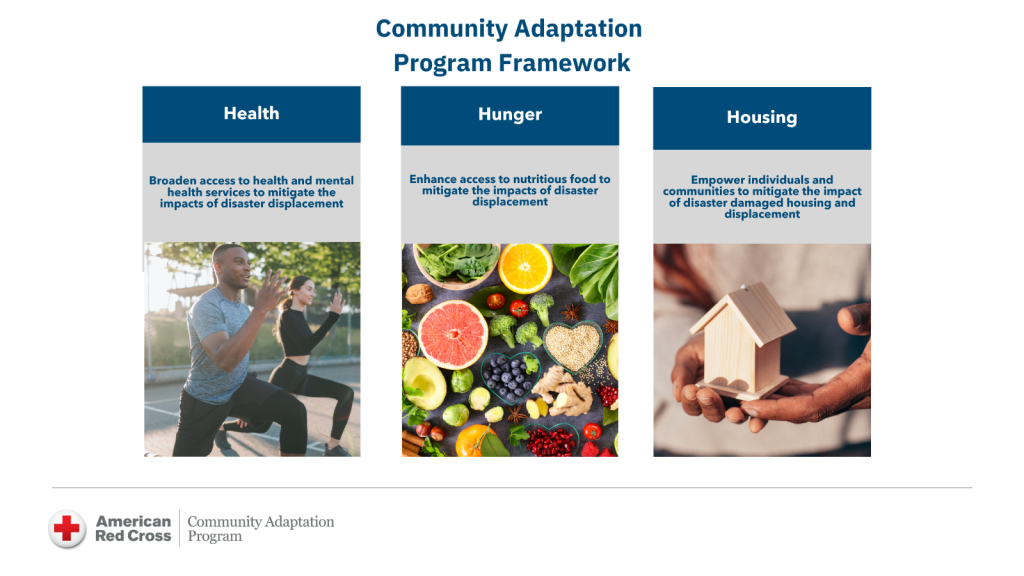
As disasters become more frequent, the Red Cross is investing in preparedness ahead of disasters and adaptation to ensure recovery efforts can meet future challenges. It’s doing this through programs like our Community Adaptation Program (CAP), a nation-wide initiative to strengthen local partner networks and build resiliency in 19 disaster-prone counties across the country, especially where recovery efforts have delayed due to chronic socioeconomic challenges.
Where Hope Lives this Earth Day
It would be easy to look at all of this and feel overwhelmed. But Earth Day reminds us that hope doesn’t come from ignoring the problem: it comes from showing up in the middle of it.
You can show up not only by helping your family and your community be better prepared but also by being a Red Cross volunteer and encouraging others to join you.
For many Red Cross volunteers, that’s exactly what keeps them grounded.
When you’re helping someone find a safe place to sleep after losing their home, the abstract becomes immediate. When you’re handing out meals or helping a family navigate recovery paperwork, you see the impact of your actions in real time.
Volunteering doesn’t eliminate the reality of the climate crisis, but it does change your relationship to it. Instead of watching from the sidelines, you become part of the response. Instead of feeling powerless, you contribute to resilience.
And perhaps most importantly, you see something that often gets lost in headlines: people helping people.
Celebrate Earth Day with us by helping people affected by disasters big and small by signing up to volunteer or making a gift to Red Cross Disaster Relief at redcross.org or calling 1-800-RED CROSS. We also encourage reviewing the work we are doing to weave environmental governance into the fabric of our organization and replicating these best practices at work and at home.