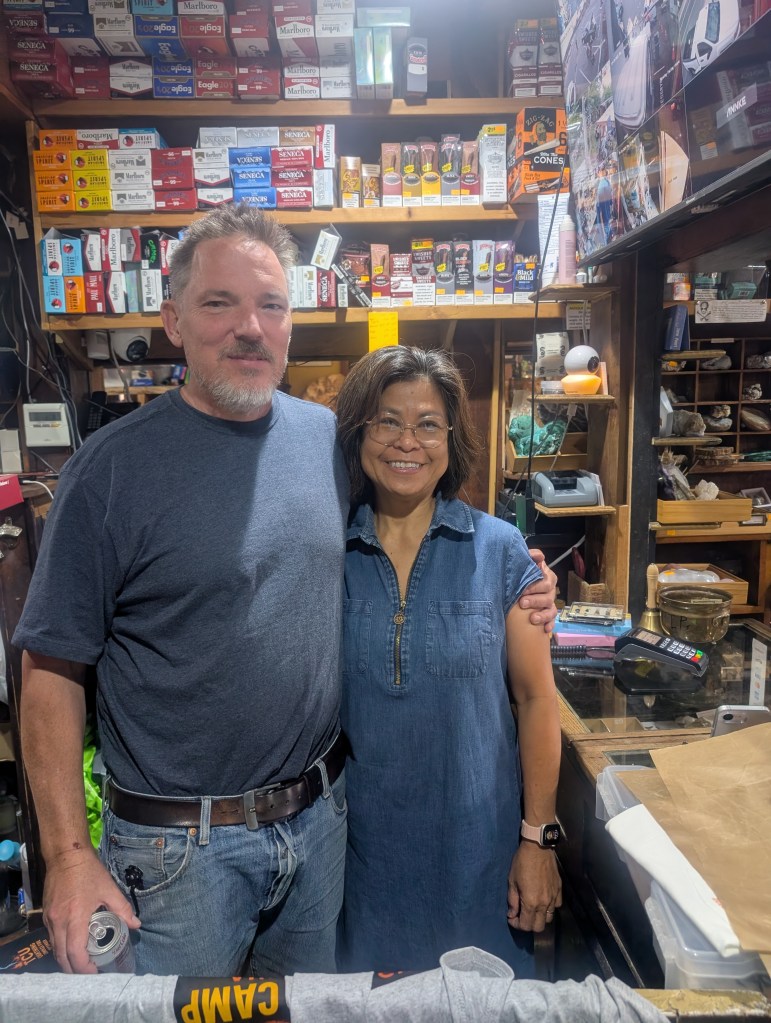
Richard and Add Beale were fossil-hunting in the area near Chinese Camp, off the road to Yosemite, about a decade ago when they noticed a ‘for sale’ sign. A few years later they sold their home and packed up their two children and moved to the town where they’ve become community icons.
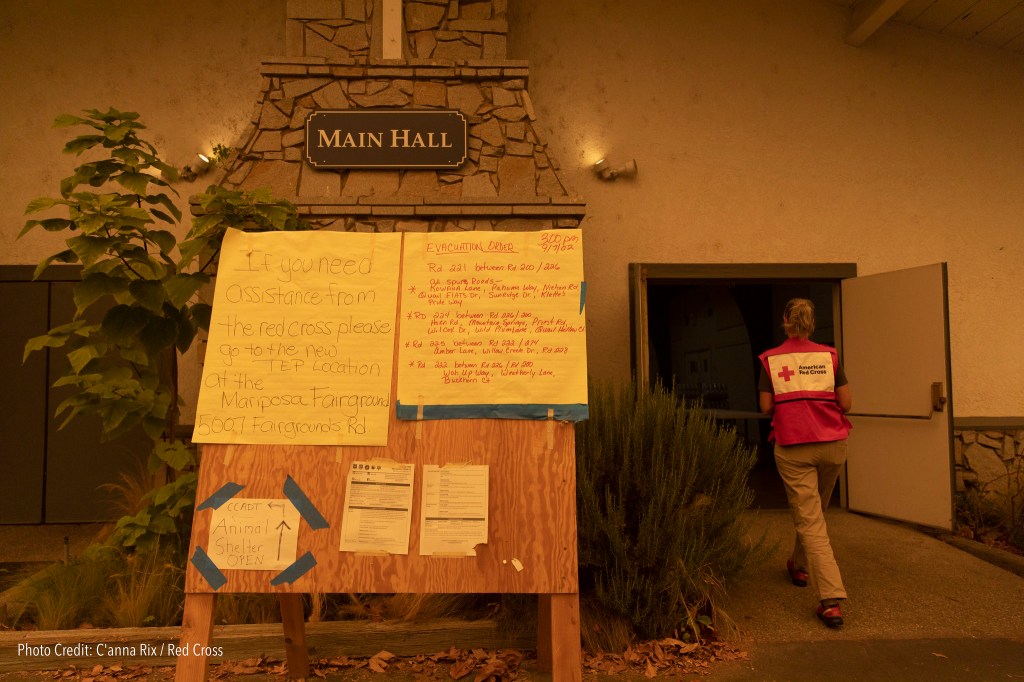
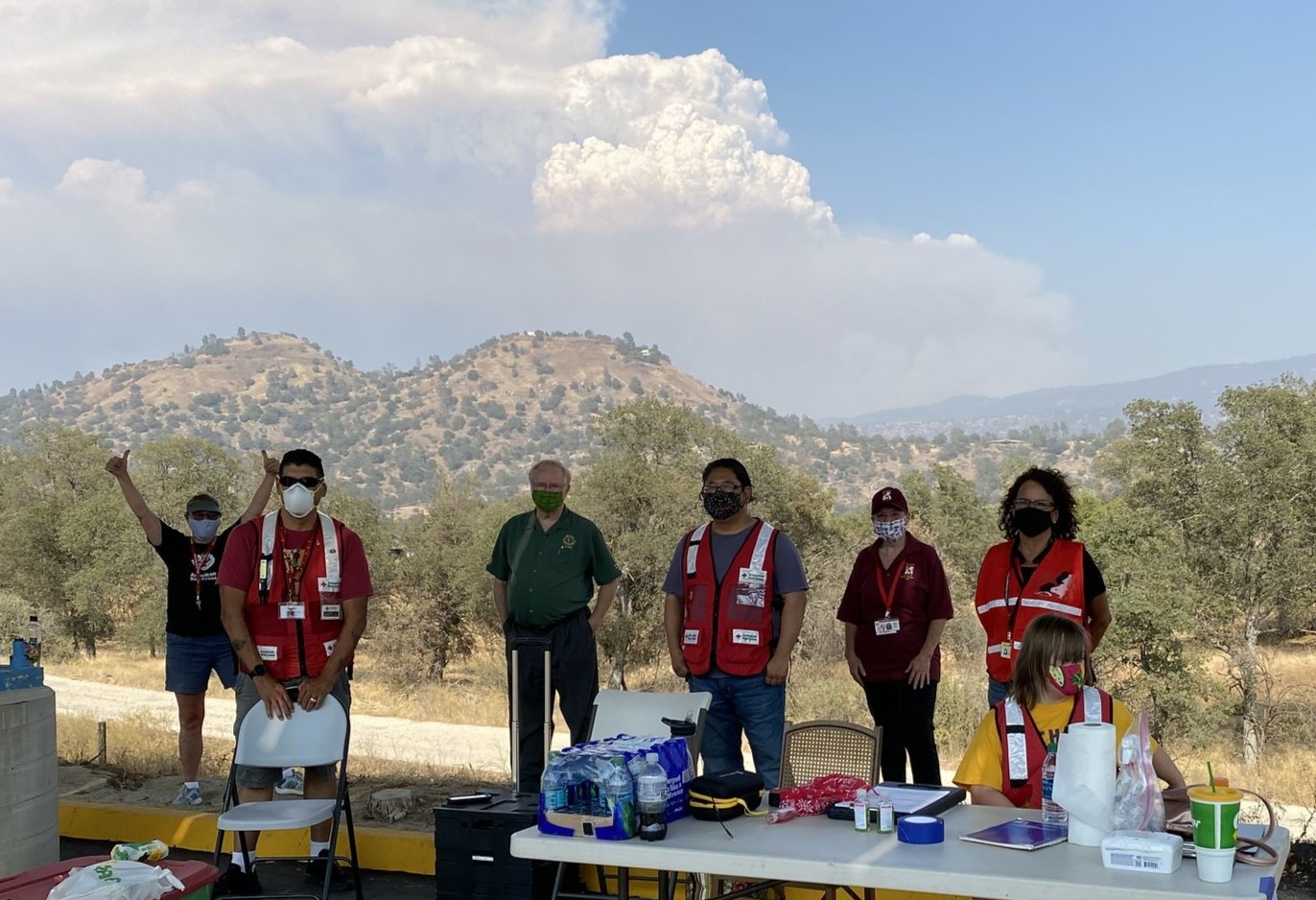
The American Red Cross could not help communities recover from disasters without the help of community partners. In Chinese Camp, a historic small town outside Sonora that was devastated when a lightning-sparked fire swept through on September 2, 2025, one standout partnership included Richard and Add Beale, owners of the Chinese Camp Store.
Ten years ago, when the Beales first noticed the “for sale” sign on the run-down store and tavern on the road from Sonora to Yosemite, they could not have imagined they would be where they are today: the well-established owners of the store and serving as the Chinese Camp’s recovery hub from wildfires that destroyed 50 of the homes in a community that has only 150 residents.
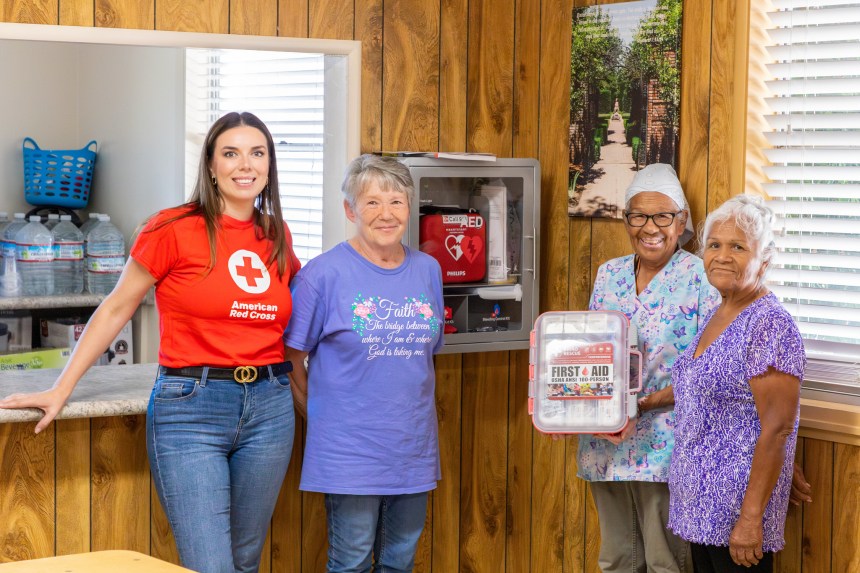
National Heart Month is a reminder of something simple but powerful: in the moments when a life hangs in the balance, it’s often a nearby neighbor or a Good Samaritan who becomes the first source of hope. Cardiac emergencies can happen anywhere — at a food distribution site, in a community center or during an ordinary day — and when they do, the people closest to us are the ones who make the difference.
That spirit of looking out for one another is what drives the American Red Cross Community Adaptation Program in Tulare County. As one of only 19 communities nationwide chosen for this long‑term investment, Tulare County is building preparedness from the inside out — through the people who already care for their neighborhoods every day.
When torrential rain opened over California in the winter of 2023, few could have imagined the devastation that would follow. Fueled by rare atmospheric rivers, communities were flooded with destruction like they had never seen before. Among them was Pajaro, a small Monterey County town, where homes and livelihoods were destroyed.
While this disaster did leave behind broken levees, it also ignited a new vision for preparedness, particularly in vulnerable communities where disasters repeatedly hit the hardest.
That realization quickly became the impetus to launch the 18th Red Cross Community Adaptation Program (CAP) across the country out of Monterey County. This is an innovative Red Cross initiative designed to strengthen local partner networks in disaster-prone areas, ensuring families have the tools and support they need before the next emergency strikes.
Vincent Hayes, a 20-year-old Vacaville volunteer firefighter, with his CEPA
20-year-old Vincent Hayes, a Vacaville volunteer firefighter, was presented with the Certificate of Extraordinary Personal Action (CEPA) by the American Red Cross on November 18 for his heroic actions of saving a man’s life while at “The Happiest Place on Earth” in early August of this year.
As Vincent and his girlfriend boarded the Disneyland Railroad 30 minutes before midnight, there was a commotion that caught his attention. Another couple adjacent to the ride was laying a man down on the floor after asking if “he was ok”.
Vincent instantly took action, hopped off the slow-moving train and ran towards the couple and the man who wasn’t ok. Once on the ground, he assessed the situation and checked for the man’s pulse. He was apneic, not breathing while unconscious, and pulseless.
By Kaytlin Crough, American Red Cross Disaster Leader
My name is Kaytlin Crough, and I currently serve as the Senior Community Disaster Program Manager (CDPM) for the Central California Region of the American Red Cross. It’s an honor to reflect on a moment in our shared history that changed the way many of us view disaster response and community resilience.
Today, I want to take you back to September 2020, when I was just six weeks into my role as a CDPM. I was still learning the ropes, still figuring out how to navigate the systems and relationships that make this work possible. And then, the Creek Fire happened.
“People came together. Neighbors helped neighbors. Volunteers stepped up. And in the midst of chaos, there was compassion.” – Kaytlin Crough
It’s hard to believe the five-year anniversary of that fire is here. At the time, Fresno County wasn’t widely recognized as a hotspot for wildfires, certainly not the kind that would become the largest wildfire in California’s history up to that point. The scale of the disaster was staggering. But what stood out most wasn’t the fire itself; it was the incredible readiness and resilience of our community.
And at the heart of that response were our first responders. Firefighters, law enforcement, emergency medical teams and the National Guard put themselves in harm’s way to protect lives and property. Their courage and tireless efforts were nothing short of heroic. They battled flames that moved faster than anyone anticipated, coordinated evacuations under extreme pressure and worked around the clock to keep our communities safe. We owe them our deepest gratitude.
People came together. Neighbors helped neighbors. Volunteers stepped up. And in the midst of chaos, there was compassion.
The Creek Fire shaped my understanding of disaster response and deepened my commitment to this work. It reminded me that even in the most unexpected circumstances, community strength and solidarity — led by those who run toward danger — can make all the difference.
There are moments in this work that stay with you — moments that shift your understanding of what it means to serve, to respond and to be present in the face of disaster.
For me, one of those moments began at the National Guard base in Fresno. I remember driving up to the front of the base, unsure of what exactly I was walking into, calling my boss and telling her I didn’t see any people, where was I supposed to go. My boss simply said, “Go around to the back.” And when I did, I saw them. Massive helicopters, engines humming, crews moving with purpose. Fluorescent SOS tape on the side of the helicopters. That’s when it hit me: everything I had been training for, everything I had studied and prepared for… it was happening. Right in front of my eyes.
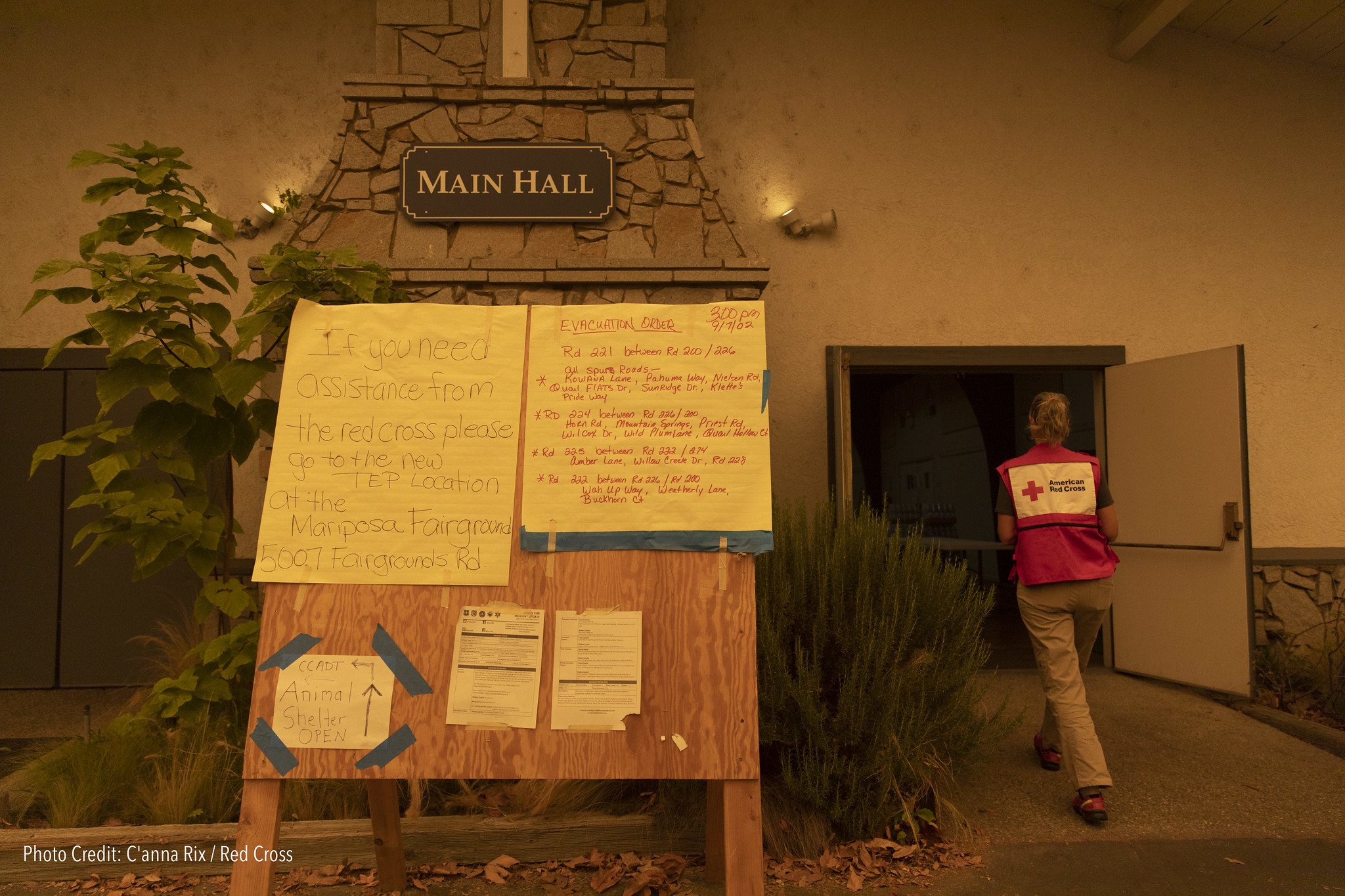
That day, we were responding to the Mammoth Pools evacuation. The next morning, I found myself at the shelter at 6:00 a.m., greeting the evacuees as they woke up or returned from the hospital with bandages covering their burns. Most of the individuals rescued were from outside of Fresno County and were able to return home that same day. But there was one woman, just one, who couldn’t.
I walked with her through the quiet streets of downtown Fresno, remember we were in a pandemic, helping her check into the Radisson Inn. She became the first overnight stay in what would become a disaster response that saw over 34,000 overnight stays in the weeks that followed.
That walk, that moment, reminded me that behind every number, every stat, every headline — there’s a person. A story. A life interrupted, and a chance for us to show up with compassion, dignity and care.
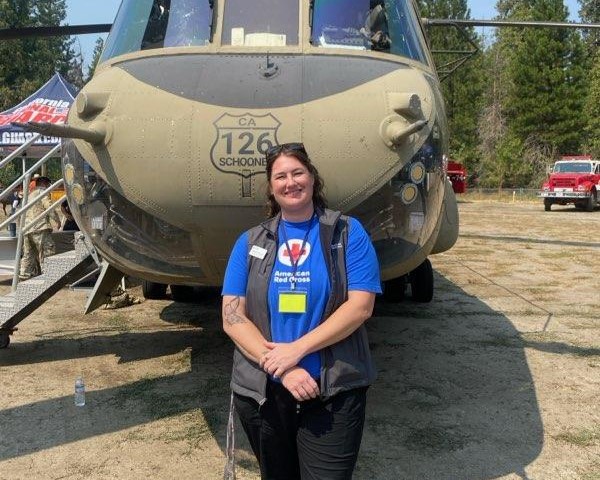
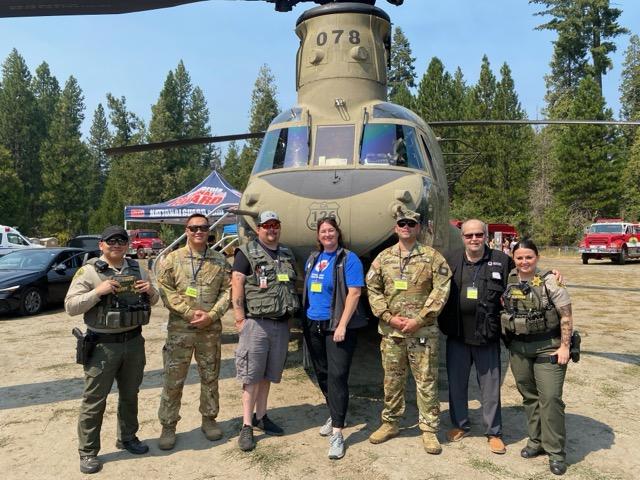
Five years later, Kaytlin stood with the same Chinook helicopter that was used to save hundreds of trapped people from Mammoth Pools at the Creek Fire five-year commemorative event to honor first responders.
Now, I want to take a moment to reflect on the adaptability and dedication during the Creek Fire Response.
As I mentioned, Fresno isn’t typically a hotspot for wildfires, so when the initial reports came in, we were anticipating a relatively small-scale operation, maybe 15 to 20 clients needing evacuation support. We prepared accordingly, bringing in coordination and feeding support for what we thought would be a short-term, limited response.
But the fire grew large, hot and fast.
By September 17th, the Red Cross was supporting nearly 1,800 evacuees. These individuals were spread across 49 hotels in five different counties. The scale of the operation changed dramatically, and with it came a host of logistical and operational challenges, especially through what we call, ‘a disaster within a disaster.’ We were managing the worldwide COVID-19 pandemic, amidst the largest wildfire we’d ever seen in the Central Valley.
What stood out most was how our team rose to meet those challenges. I watched firsthand as coordination efforts scaled seamlessly, adapting to the needs of nearly 2,000 people without missing a beat. Every obstacle was met with determination, flexibility and a deep commitment to serving our clients.
And again, we were not alone. Firefighters and emergency personnel were out in the field, battling the blaze, saving lives and working side by side with us to ensure evacuees had safe places to go. Their bravery and professionalism were a cornerstone of the response effort.
This response was a powerful reminder of what we’re capable of when we come together with purpose and resilience. It was an extraordinary effort—and one that made a real difference.
The Creek Fire was a Level 5 disaster response operation in the Red Cross world—one of the most complex and demanding we’ve faced—and the numbers speak volumes about the scale and impact of our collective efforts:
183 volunteers and staff were assigned to our Red Cross operation.
4 Temporary Evacuation Points opened for those affected by the evacuations, providing services for 16 days and nights.
3 Local Assistance Centers providing recovery support were open for 18 days.
34,332 overnight shelter stays were provided to evacuees.
80,844 meals were served.
20,514 snacks were distributed.
2,578 disaster emergency supplies were handed out.
More than 2,500 clients served across Sheltering, Disaster Health Services, Disaster Mental Health, Disaster Spiritual Care and Recovery.
At the peak, 51 hotels were managed as non-congregate shelters across 5 counties.
These numbers reflect not just logistics. They reflect lives touched, comfort given and hope restored. Red Cross hands and hearts were behind every meal, every shelter stay and every moment of care.
Throughout the long-term recovery efforts following the Creek Fire, we worked hand in hand with the Creek Fire Recovery Collaborative to support impacted communities. The Red Cross was proud to be the largest funder of these recovery efforts. But that support was only possible because of our incredible network of partners and the overwhelming generosity of the community. Together, we were able to meet critical needs and help families rebuild their lives. It’s a powerful reminder of what we can accomplish when we come together.
But our work doesn’t end here. Disasters will continue to impact our communities, and we need more compassionate, skilled, and resilient individuals to join us. If you’ve ever considered volunteering, or know someone who might be ready to make a difference, now is the time. Whether it’s sheltering, logistics, health services or emotional support, there’s a place for everyone in the Red Cross mission.
Just like we did during the Creek Fire, together, we can continue to build a stronger, more prepared community. This work is not easy. But it is meaningful. And I’m grateful every day to be part of it.
Let’s keep showing up, lifting up and standing up for those who are seeking hope amidst disaster.
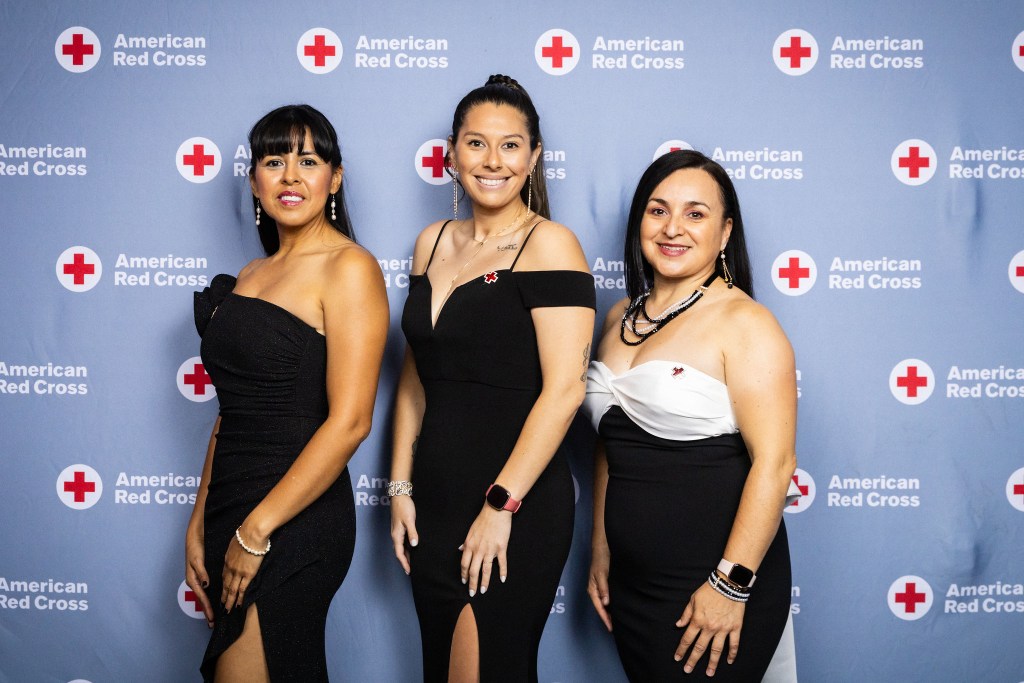
The Community Adaptation Program team together at the 2025 American Red Cross Northern California Coastal Region Gala. Pictured are Lucy Rojas (left), Gabriela Perez Albarracin (middle) and Maria Magaña (right).
By Mark Phillips, Board Member Central Coast Chapter
The American Red Cross Community Adaptation Program (CAP) is an initiative to enhance the ability of local and hyper-local organizations to provide services during disasters. The Red Cross leverages its expertise, partnerships and network to level up the impact of the grassroots organizations that know their communities best. By building the capability, capacity and continuity of these groups during blue sky periods, they are better able to provide vital services during trying times.
CAP came to Monterey County in July of 2024, when Gabriela Perez Albarracin joined the area from the Lake County, California. Under her leadership, the first year of CAP activity in Monterey County has had a number of successes and laid the groundwork for an impactful year two.