Category Archives: Homepage Posts — Other

Best RV Center’s Commitment to Helping Wildfire Victims

In early January, a series of devastating wildfires tore through the Los Angeles metro area, leaving destruction in their wake. The fires, which impacted multiple neighborhoods, resulted in at least 29 deaths, the destruction of over 16,000 structures, and dangerously unhealthy air quality affecting millions. As communities continue to recover from this disaster, businesses and organizations across California have stepped up to provide support.

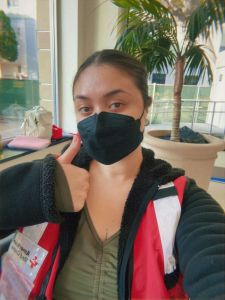
Samantha, Naiel Ammari’s daughter, evacuated from Calabasas during the devasting wildfires.

One such business is Best RV Center, a family-operated dealership located in Turlock, Calif. Established in 1997 by Naiel Ammari and his brother Nazeh, Best RV Center has grown into one of the largest RV dealerships in the region. Situated on 20 acres along Route 99, the dealership boasts an impressive inventory of 1,700 RVs, offering a wide range of models to customers from across the state.

When the wildfires broke out in January, the devastation hit close to home for Naiel. His daughter Samantha, a graduate student at Pepperdine University, was among those affected. Living in Calabasas, she faced difficulties commuting to school due to road closures. With no water or internet access, she and other students found support from the American Red Cross, which provided shelter, clothing, water and essential supplies to those affected by the fires. Pepperdine University was forced to close temporarily, shifting classes online, and Samantha chose to leave the area and drive eight hours back home to Turlock.

Read more

The Black Cloud: A Pajaro Resident’s Story of When the Levees Broke

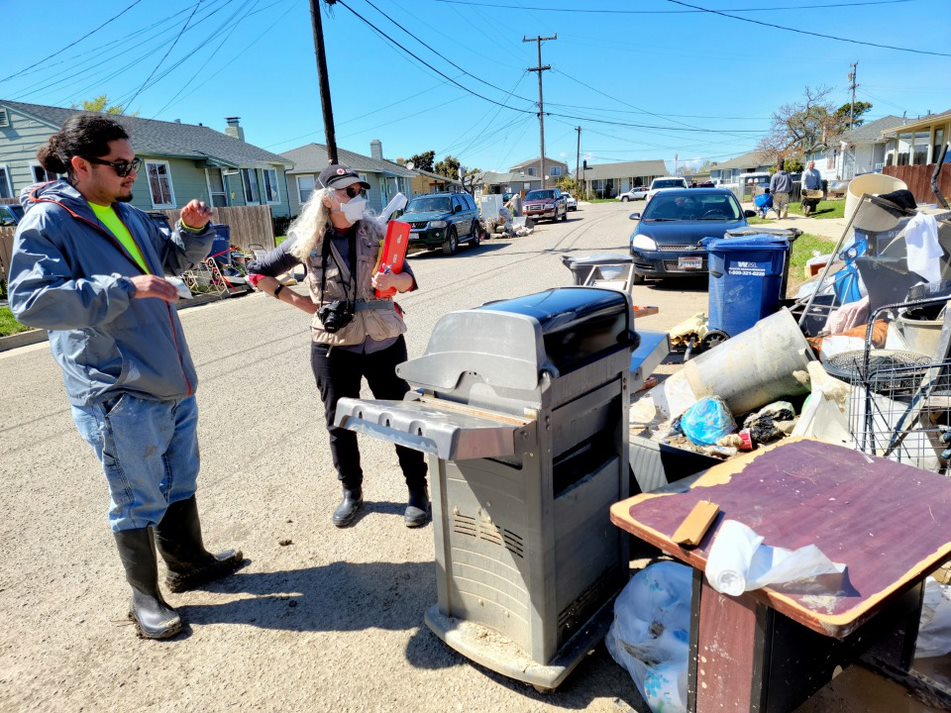
Red Crossers surveyed the widespread flooding that left Pajaro underwater, including Joanne’s home (pictured in the distance between the volunteers).

Written by: Jillian Robertson | Senior Manager, Long-Term Recovery Communications, American Red Cross

“People were caught off guard. It was 1 a.m. The levees were breaking, and we were told, ‘You’ve got to go!’ It was very traumatic.”

Joanne Jackson lived with her husband and her daughter in their home in Pajaro, California, before catastrophic floods forced them from their home two years ago, in December 2022.

For Joanne and her husband, they were lucky. The day before, the sheriff had warned them to evacuate. They left in their travel trailer where they’re still living today, as they work on repairs to their home that was rendered uninhabitable by the floods.

Read more

Disaster Relief in Action Two Years Later: Red Cross Response to Pajaro’s Devastating Atmospheric Rivers

From December 2022 through March 2023, devastating storms and flooding drenched California over several months, destroying homes and businesses. This intense precipitation—the result of atmospheric rivers—is extremely rare in California, so areas that normally wouldn’t flood, like the community of Pajaro in Monterey County, home to migrant farmworkers, and large portions of Tulare and Kern counties, were completely inundated. These damaging atmospheric rivers spurred landslides and tore apart homes, inflicting financial losses and destroying irreplaceable, precious memories. While the relentless rain affected much of the state, this disaster took a severe and disproportionate toll on the most vulnerable.

Read more

Baby’s lifesaving blood transfusions inspire thankful father to donate to the Red Cross

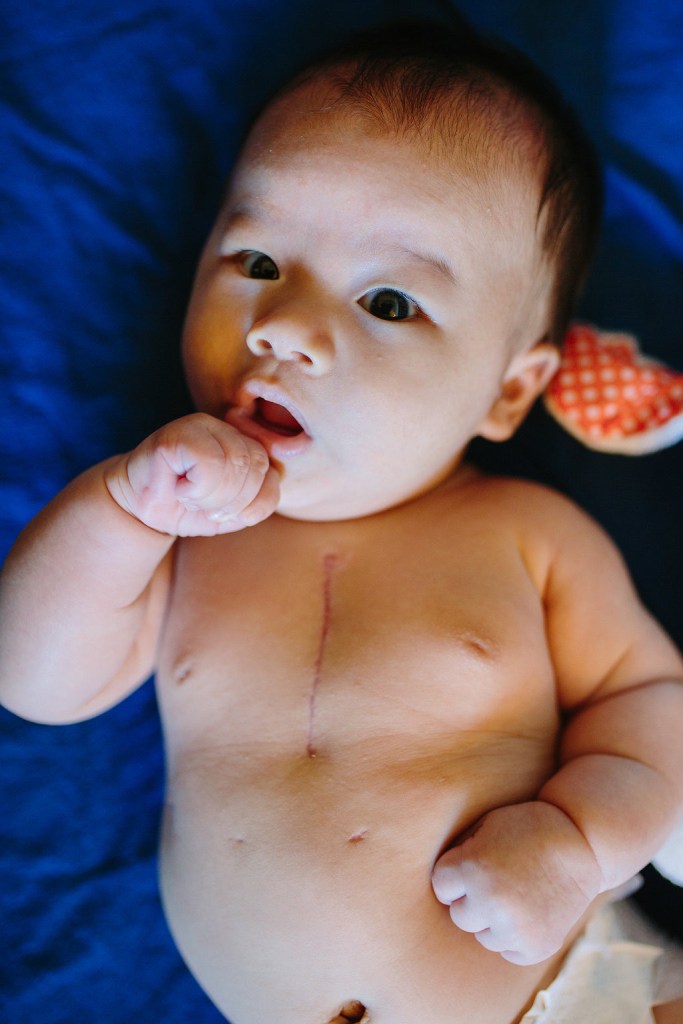
Baby Ripley needed blood transfusions to recover from open heart surgery.

“He was turning blue when he was crying,” recalls Hayes Shair, about his son. Baby Ripley needed open heart surgery but he was only a newborn.

Ripley’s parents knew before he was born that he had a congenital heart defect called Tetralogy of Fallot. It was identified during his mom’s 20-week ultrasound. But they didn’t expect the operation to happen so fast. Ripley was rushed into open heart surgery at just 30 days old.

“The speed at which it had to be done was unexpected,” Hayes says.

Unfortunately, baby Ripley’s situation is not rare. According to the US Centers for Disease Control and Prevention, heart defects affect nearly 1% of births, or about 40,000 babies, each year in the United States. Congenital heart defects affect how blood flows through the heart and out to the rest of the body. Babies with critical heart defects need surgery or other procedures in the first year of life.

After the surgery to repair the hole between his heart’s left and right ventricles, baby Ripley needed multiple blood transfusions to recover. He stayed in hospital for about two weeks.

But you wouldn’t know it today! An active 8-year-old now, he gets checkups every year but is cleared to do regular kid activities.

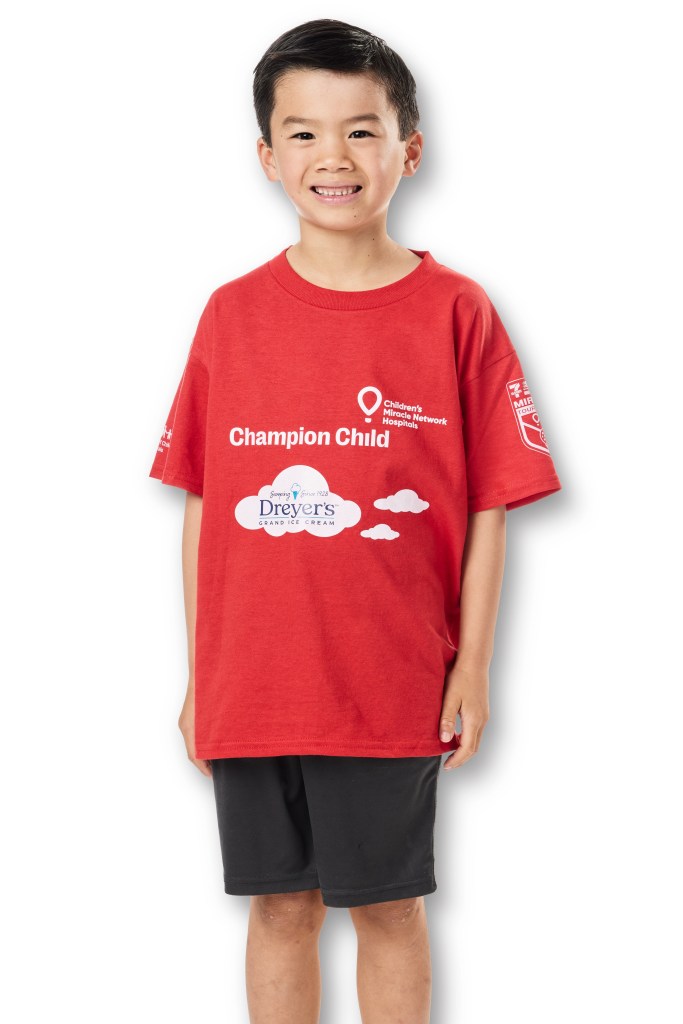
Ripley is a healthy and active 8-year-old now
Ripley is a healthy and active 8-year-old now.

“He’s a handful, but he’s a fun handful!” says Hayes, a father of two.

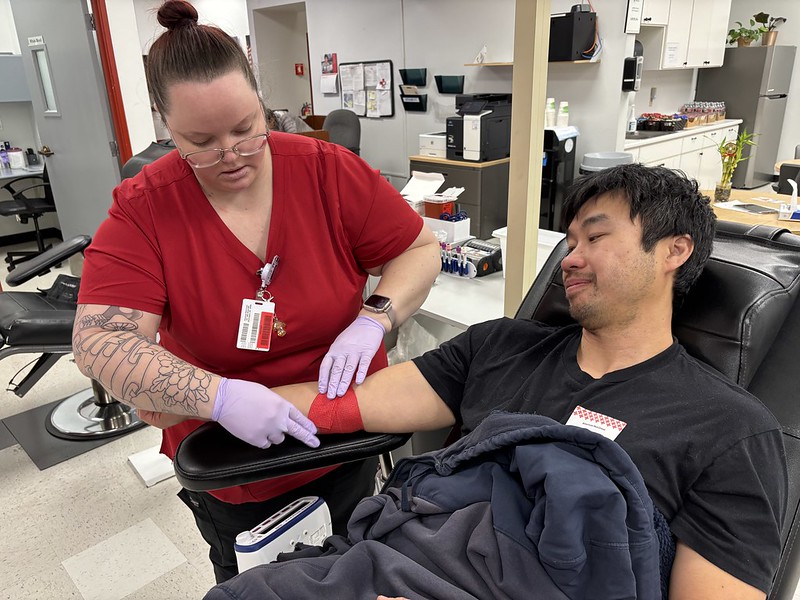
Hayes was so thankful for the lifesaving blood his son received that he decided he wanted to donate himself. With some encouragement from his wife (a long-time blood donor), Hayes gave blood for the first time more than four years ago. Now a regular, he gives blood to the American Red Cross every two months.

He says it’s a positive experience, “It feels good. People here are very friendly.”

The Red Cross appreciates blood donors like Hayes, who have learned through personal experience how important blood donations are to saving the lives of children like Ripley. Thank you, Hayes and all our regular blood donors!

If you too are inspired by Baby Ripley to donate lifesaving blood or platelets, make your appointment at redcrossblood.org today!

Beyond the Desk: My Red Cross Transformation

by Kelsey Marasigan

Photo courtesy of Kelsey Marasigan

In my weekly one-on-one meetings with my supervisor, the question of professional development often arises. Usually, I’d offer a standard answer, something about improving my Excel skills or taking a project management course. Honestly, I hadn’t given it much serious thought. That is, until I said “yes” to a deployment opportunity to help with the disaster response operation for the devastating wildfires in Los Angeles. It was then I realized the Red Cross offers growth opportunities far beyond what I could imagine – opportunities for profound personal and professional development.

Read more

Health, Hunger and Housing: How the Red Cross partners with local non-profits to support high risk communities in Central Coast

From left to right: Maria, Gabriela, and Lucy are leading the new CAP chapter in Monterey. Photo Courtesy of CAP team.

When natural disasters sweep across regions repeatedly, it takes a lot of strength and resilience from communities to rebuild their lives. For some folks, it can take a greater effort to reestablish a sense of normalcy due to the lack of resources in the area or their socioeconomic conditions. The Community Adaptation Program (CAP) is a recent initiative by the American Red Cross designed to bring relief to regions that experience high risk of disasters through partnerships with local nonprofit organizations. One of the newest additions to the CAP’s locations across the country was just established in Monterey County, California.

CAP focuses on addressing three key areas through its initiatives: health, hunger and housing. Each CAP team is composed of a manager and two coordinators who work together to foster and sustain the connection between the Red Cross and local partners. The community of Pajaro in Monterey was a strong contender for needing these services due to reoccurring natural disasters that devasted the area. the area.

Read more
« Older Entries Recent Entries »