
The Promise of Blood from Diverse Donors: A Red Crosser’s Emotional Commitment to Saving Lives
Dedicated to the memory of Chaznee Brown, blood donor advocate and Sickle Cell Warrior
When Ed Faso was just a baby, his mother suddenly began to hemorrhage and needed more than seven units of blood to survive. His father, serving in the U.S. Navy at the time, asked his commanding officer and about 20 colleagues to donate blood on her behalf.
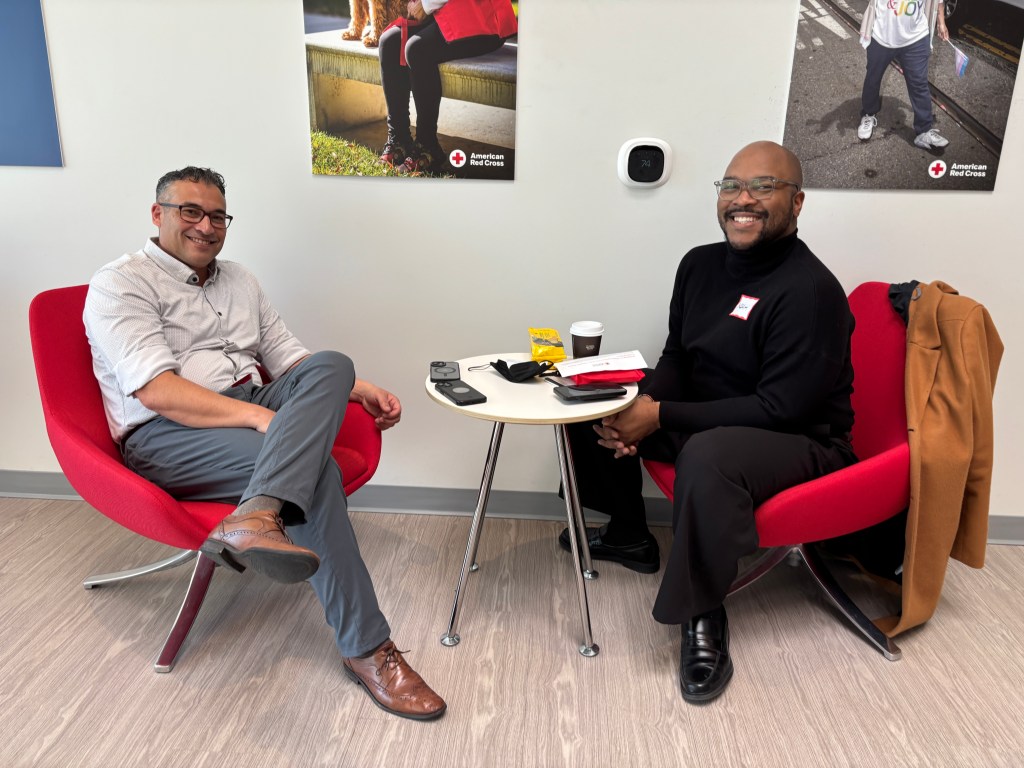
“They got behind my father and my mother. And all U.S. Navy Sailors in his Command donated blood for my mom,” recounts Ed. Growing up with the story of how blood donors saved his mother’s life set the stage for his career as a champion of a strong blood supply.
Today, as the emerging accounts manager for the American Red Cross in the Northern California Coastal Region, Ed works alongside local community partners to support blood drives—especially those that help diversify our blood donor base.
Another major influence on Ed’s work was his colleague and friend, Chaznee Brown. She was also an account manager with the Red Cross. Ed remembers noticing she was often in significant pain, a result of the sickle cell disease she battled.
“I’ve heard it described as being hit with a baseball bat. I’ve heard it described as having your bones kind of split open from the inside out. And the pain is indescribable,” he says. Sickle cell disease distorts soft and round red blood cells and turns them hard and crescent shaped. As a result, blood has difficulty flowing smoothly and carrying oxygen to the rest of the body, which may lead to severe pain, tissue and organ damage, anemia, and even strokes.
“There really is no relief to it until they get some kind of medical treatment, whether that be transfusion, pain management or gene therapy,” Ed explains. In the U.S., it is estimated that over 100,000 people have sickle cell disease and may require frequent blood transfusions throughout their lifetime—as many as 100 units of blood per patient each year.
Despite her own health challenges, Chaznee dedicated her work to collaborating with organizations rooted in the African American community, bringing in donors with African heritage. Ed saw firsthand how she helped build the foundation for the Red Cross to deepen its understanding of sickle cell disease and strengthen its advocacy for patients.
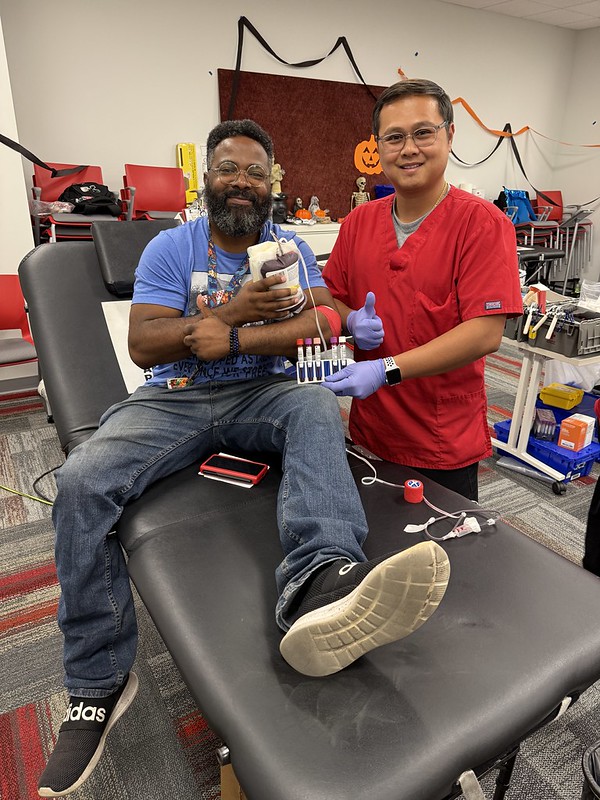
“It’s amazing what she did in that short amount of time,” Ed says. “I mean, we’re all better people because we got to work with and know Chaznee. And she left a legacy here in Northern California within the Red Cross to be a champion for patients with sickle cell.” Chaznee passed away in 2016 at just 33.
The work that Chaznee began—and Ed continues—is vital. Since launching the Sickle Cell Initiative in 2021, we’ve been able to witness more than 140,000 first-time African Americans roll up a sleeve to give lifesaving blood; however, the current Red Cross blood supply doesn’t contain enough compatible units for sickle cell patients. Sickle cell disease is the most common genetic blood disorder in the U.S., and regular blood transfusions are critical to manage extreme pain and life-threatening complications. Those transfusions need blood that closely matches not just type, but antigens—something more likely when donors share similar genetic backgrounds.
Just over 4% of Red Cross blood donors identify as having African heritage, yet one in three African American blood donors is a match for people with sickle cell disease. Growing the number of Black donors increases the amount of compatible blood available.
To reach potential donors, Ed visits with several organizations including Black student unions at high schools, Bible study groups, and employee resource groups. He also currently works with organizations like 100 Black Men of America, Jack and Jill of America, NAACP, the National Black Nurses Association, the National Pan-Hellenic Council fraternities and sororities like Omega Psi Phi and Sigma Gamma Rho, and nonprofits such as Sickle Cell Anemia Awareness SF and Cayenne Wellness Center that support sickle cell patients and families.
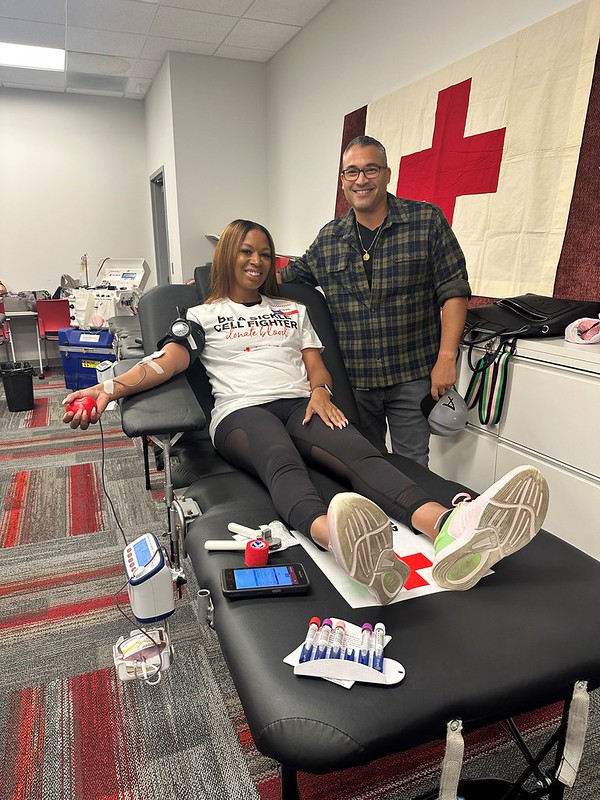
Ed’s Red Cross journey began with his first role back in 2008. He left for a while to work in software and technology, but he returned in 2024.
“I boomerang-ed back,” he says. “At the end of the day, I wanted to feel the way I felt when I was with the Red Cross… Having that sense of helping others and having a mission driven purpose to change the lives of folks for the better was something that was very, very important to me and I wanted to get back to that.”
That sense of purpose is renewed every time he reconnects with partners in the sickle cell community.
“When you walk up to somebody and their arms are open, and you hold each other because you’re happy to see each other, and you’re happy to be doing the work that you’re doing… the embrace is just another reminder to let me know I’m in the right spot and I’m doing what I need to be doing,” he says.
He recently shared this sentiment with his wife. The two live in Alameda with their 15‑year‑old son—with whom he enjoys fishing–and their black Labrador, Miss Lippy, a foster dog they ended up adopting after nursing her back to health.
Ed’s story comes full circle—from the sailors who stepped up to save his mother’s life, to his late colleague, Chaznee, who laid the groundwork for his vocation, to the community partners who stand beside him today. As he continues to build these relationships and champion the needs of sickle cell patients, Ed is helping create a future where every person who needs a life‑saving transfusion has a perfect match waiting for them. His dedication honors the people who inspired him and strengthens the community he serves—one donor, one partnership and one embrace at a time.
Visit redcross.org to donate blood today.
 Your Red Cross Update