Tag Archives: Regional

Coping Tips After Recent Mass Shootings
imageAfter events like the recent mass shootings in Gilroy, El Paso, and Dayton, people may have feelings of fear, anxiety, grief, and helplessness. These are all normal feelings after this type of event. Something like this is upsetting for everyone. People near the emergency are affected, as well as people all over the country who may have family in the areas; who may know someone who was affected; or people who are watching the media coverage of this tragic situation.

Children are especially at risk as they may become afraid that the event will happen again, or that they or someone in their family may be injured or killed. The injuries and fatalities are difficult for them to understand. How a parent or other adult reacts around the child following a traumatic event can determine how quickly and completely the child recovers.

This is difficult to understand why something like this happens and it’s important for people to connect with and support each other. The Red Cross offers the following tips to help people stay strong:

  • Events like this can cause feelings of uncertainty and anxiety since no one knows what could potentially happen next. Remember that it’s okay to feel nervous.
  • Stay informed but limit media exposure of the events, especially for children. Children are especially vulnerable to stress reactions related to media.
  • Parents should let children talk about their fears and then reassure them about their safety. Talk with them in ways that they can easily understand. Let them guide the conversation; share details only when they ask about them.
  • Be patient with yourself and others. It’s common to have any number of temporary stress reactions such as anger, frustration, and anxiety.
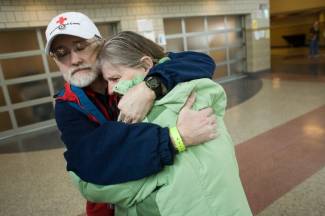
  • Spend more time with family and friends and offer your support. Hug one another and listen.
  • Watch for signs of stress in your family, friends, and children. Get help from others if needed.
  • Take care of yourself. Eat healthy, drink plenty of water, and get enough rest.
  • To reach out for free 24/7 crisis counseling or support, contact the Disaster Distress Helpline at (800) 985-5990 (press 2 for Spanish) or (800) 846-6815 (TTY) or text the Disaster Distress Helpline at text ‘TalkWithUs’ or ‘Hablanos’ (for Spanish) to 66746. 
EAqJuZHXkAEGVCz

Additional Resources


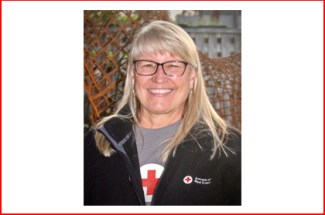
Tanya Sullivan of Sonoma County Awarded Coveted Clara Barton Honor

Tanya Sullivan 420x279

by Marcia Antipa

“I was stunned.”

That was the reaction from Red Cross Volunteer Tanya Sullivan of Sonoma County when she was given the Clara Barton Honor Award for Meritorious Volunteer Leadership for the California Northwest Chapter.

“I was so surprised and just so honored. Just the name – it’s quite a recognition!”

Anyone who has worked with Tanya in her many Red Cross volunteer roles would not be so surprised to hear of her award. Marianne Arden, of Volunteer and Youth Services, says, “Tanya always downplays her role, but she is absolutely critical to our chapter, and during a disaster, she probably puts in a 70-hour week.”

The Clara Barton Award is given to a volunteer who has made “significant contributions while working with other volunteers and paid staff in developing and implementing effective programs in a resource manner which has enabled the American Red Cross to provide valuable service to the community.”

Tanya’s journey to this prestigious award began four years ago when her uncle passed away. He was a volunteer firefighter in the small Sierra Nevada community where Tanya was raised. “His death motivated me as a new empty nester to find ‘the next thing in my life.’”

Previously, Tanya had a professional career with Fireman’s Fund, then spent time at home raising her children, volunteering in the schools, little league, and other organizations. She also took a part-time job at a nursery. But when her children left home, she wanted to find a well-organized group that could use all of her skills and, as she says, “help me lead an impactful life.”

That group was the American Red Cross, where Tanya joined the Disaster Action Team. Her first “Mission Moment” was a call to a house fire late one night.

“It was in December, very dark and very rural, east of Santa Rosa up in the foothills.”

Tanya says every time she deployed to help a family, “there is an element of shock, of ‘what are we going to do tomorrow?’ We are there while the house is still smoldering, and the fire trucks are still there. One family I met was focused on how the kids were going to get to school.”

Tanya also deployed to the Russian River floods this winter, where she handed out buckets of cleaning supplies to start people on their “disaster recovery.” She says it’s her favorite role.

“You’re not just giving them a bucket – you’re hearing their stories.”

Tanya says in the Russian River community, many residents have been through floods several times over the years.

“The word you hear so much in these situations is resilience. It has become an overused, hashtag word. But I saw it; neighbors helping neighbors pull soaking wet furniture from homes, finding a way to start moving forward.”

Tanya now volunteers in Workforce Engagement. That’s where she earned the Clara Barton award, for streamlining the system to help new Red Cross Volunteers get trained and ready for deployment.

“It was full of speed bumps and potholes. Courses that were required didn’t exist; no one knew where to look. I saw this opportunity to fix all that. I don’t like whack-a-mole solutions that provide an immediate answer, but create a problem downstream.”

Tanya compiled a new document that closed the gaps in workforce training, at the regional and national level. “I was the persistent squeaky wheel that wouldn’t go away.”

Those who nominated her for the Clara Barton award wrote, “Her impact is huge, as this is a primary tool for all of Workforce Engagement, and impacts each and every [disaster services] volunteer.”

Tanya is obviously proud of her work, and of the army of volunteers that carries out the mission of the American Red Cross.

“It just blew my mind when I found out how few paid staff the Red Cross has, and look what we can do! Red Cross knows how; I love being a part of that!”

Congratulations to Tanya Sullivan!

For information about how you can become a volunteer with the American Red Cross, please click here.

Marcia Antipa is a volunteer writer with the Northern California Coastal Region.

Sticking with it for the community

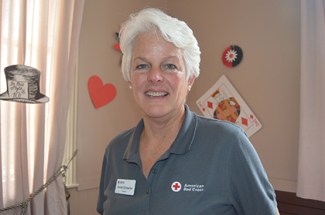
Annie Schaefer - 420x279The American Red Cross named Annie Schaefer the 2018 Gene Beck Memorial Volunteer of the Year for Napa County. Though Annie shuns the limelight, her passion and belief in the Red Cross exude with every breath and action she takes on behalf of the agency. This is her story.

Ten years ago, Annie Schaefer worked for a large pharmaceutical company in Napa. The senior team set aside 100K every year to give to important causes, so it was no surprise when a board member from the American Red Cross in St. Helena made a pitch to her company’s leadership in search of additional board members. Annie’s boss recommended her for the job.

“I got a cold call, [this man] shared his experience, and I listened,” Annie reflects. “He asked me about my involvement in or knowledge of the Red Cross. I only had one distant association. My mother was a nurse in the community, and my parents were always active. But the cool thing about the Red Cross was that my Mom volunteered at the summer fair at the first aid station. So I agreed to attend a Board meeting.”

At the time, in 2009, Annie had a son overseas in Iraq. During that Board meeting, the team talked about the work of the Red Cross with military families. “I got a lump in my throat,” she says. “And it became apparent I was one of the only people with a direct link to the military. I bit, and joined the Board.”

As Annie learned more, she started taking classes. She dove into her work as part of the chapter’s Disaster Action Team. Then in 2014, when Annie had taken the helm as the Napa Valley Board Chair, American Red Cross transformed its local operations nationally to meet the growing demands for services while making the best use of donor dollars. In the new chapter design principle, a chapter must serve a minimum population of 340,000.  This led to the consolidation of many smaller Red Cross chapters into fewer larger ones, hence the birth of California Northwest. A year later, Annie was the last remaining Napa Valley Board member. “The timing couldn’t have been worse,” she says. “My primary concern was to keep the Red Cross front and center and to let people know we weren’t going anywhere.”

Annie says the timing was challenging.  In the middle of all the transitions of structures and roles, the area was hit with a couple of major disasters. The 2014 earthquake destroyed the Napa office, even though St. Helena’s survived. And then the wildfires of 2015 ravaged the northern counties. “Twelve hundred people showed up in 48 hours at the Calistoga fairgrounds,” she recalls. “And that’s when we got the hit. People said, ‘the Red Cross doesn’t know what they’re doing’ and people were left with a bad taste in their mouths. But everyone was at fault; the entire region – government, nonprofits, Red Cross, companies, residents – was unprepared and overwhelmed.”

Why did Annie stick with it in spite of challenging feedback and community misperceptions? “I thought: these are my people,” she says. “It’s the personal piece of it that makes it worthwhile. My community is what kept me coming back. Even when it became the most grim.”

Annie recalls, “When I helped open the mass care shelter in 2015, a very gentle retired fellow came up to me. It was quiet, and he smiled and said ‘ya know, I’ve always donated to the Red Cross so now I get the payback.’ And it’s because of our [donors and volunteers] that we can provide for people who need us.”

When asked what she would tell potential volunteers for the Red Cross, Annie replied “You can’t measure the warmth. When you give something, don’t look for what you get out of it, look for how it makes you feel. Get the whole story – go out on a call – you can watch and see what happens.”

For information about how you can become a volunteer with the American Red Cross, please visit this web page.

Recent Entries »