
Laura’s Lesson from Alaska: Appreciating the Communities We Serve
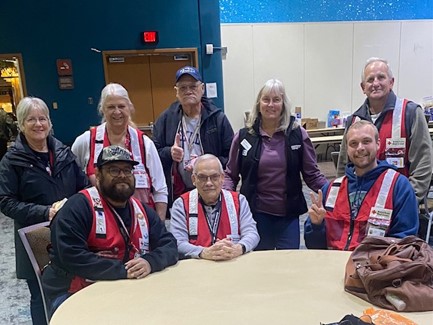
Being called to assist those whose lives have been upended by a natural disaster is not only an opportunity to provide aid and service. A deployment is also a unique opportunity for cultural exchange, and Laura Hovden’s deployment to Alaska in the wake of Typhoon Halong in October 2025 was a testament to that.
Laura first got involved in local disaster management volunteer opportunities with the American Red Cross in 2014. Once her children left home for college, she left her own backyard to deploy to natural disasters across the country. She focused on organizing shelters during her initial deployments, but she soon secured more responsibilities as part of the Mass Care team that manages relief operations for larger natural disasters.
“I like helping people and I like high-intensity situations like crises,” Laura said. “I also had an HR background, so that was helpful. I got involved in training and development, and a lot of what I do now is to develop other people and build leadership and depth within the Red Cross. One of the things I like the best about the Red Cross is all the amazing people that you meet. The volunteers are so spectacular.”
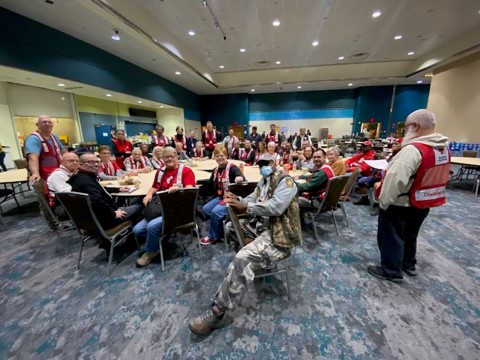
Laura has deployed to various places across Northern California several times to aid those affected by the wildfires, as well as the wildfires in Los Angeles in early 2025. She has also travelled to the East Coast, Guam and Puerto Rico throughout the years to bring relief to those devastated by hurricanes.
While she spent most of her early deployments at the headquarters of each disaster site, she has started working on-site at the shelters more, most recently on her deployments to Los Angeles and Alaska.
“It’s two totally different jobs. Having been in headquarters more, it’s been really refreshing to be in the actual disaster at the shelter site. It gives you a much better perspective. It’s a reality check,” Laura said. “I’m senior enough that when I go on a disaster, I never quite know what I’m going to do. In the L.A. wildfires, I started as Mass Care Chief in headquarters. However, when we took over the Pasadena shelter, they needed someone with experience, so they sent the two of us over. You just fill in wherever the need is.”
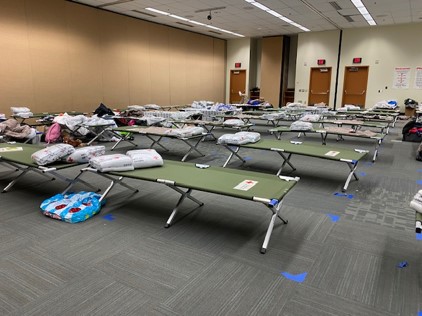
Regarding her deployment experience to Alaska, Laura highlighted that the team had to act quickly to account for all those who were displaced from the typhoon. Once she had arrived at the first shelter in Anchorage, she was asked to open another shelter for 500 more shelter residents in less than five hours.
Since many, if not most, of those affected by the Typhoon were Alaska Natives, Laura and the rest of her team adjusted their approach to relief operations in order to meet their needs.
“We got them food but then realized the food wasn’t what they were used to. They’re used to eating moose, walrus, berries and fish. We worked through the local Alaska Native community to figure out how to get those things for them,” she said. “Their primary language was Yupik, which is not close to anything I’ve heard before, and we translated our Red Cross signs into Yupik. Little things that made it better for them.”
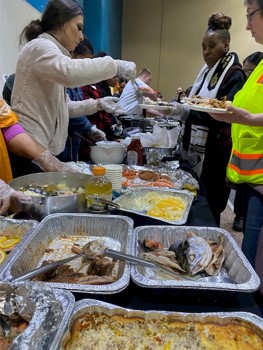
According to Laura, residents of Anchorage connected the Red Cross operation team with community partners to provide educational opportunities for non-Alaskan Red Crossers to understand the customs and lifestyle of those they were serving.
As a result, the operation expanded its support to meet needs that were not anticipated along with the traditional resources the Red Cross provides, such as disaster health and mental health services. For example, a representative from the Anchorage bus system was invited to the shelter to teach residents how to use a bus pass, since many of them had never used public transit in a big city before their arrival in Anchorage.
Native shelter residents also took the time to educate Red Cross volunteers about their culture, which was something Laura called out as unique to this deployment experience. This continuous learning was what led volunteers to forge such strong bonds with shelter residents.
Content Warning: Photo of seal carving contains imagery that some readers may find graphic. Viewer discretion is advised. Click here to view photo.
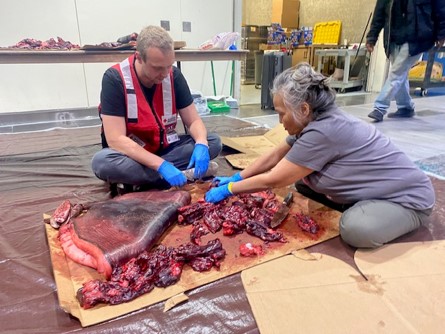
“For example, how they greet each other is different. They tell you their name, where they are from and where their parents are from to tie themselves to the community,” Laura said. “Within a week, they took us in as part of their family and even invited us to participate in cultural activities. They did a seal carving where someone had harvested a seal that morning, and they explained what they do with every part of the animal. It was fascinating.”
Laura illustrated the close-knit bonds among all of the families that were in the shelter.
“The shelter was only for people from that specific village, so it was like living in a small town and repopulating it to one site,” she said. “In the village, they have ‘communal child-caring,’ where everybody watches everybody else’s children. When they transitioned to a hotel, all of a sudden, you’re in separate little rooms. To help, we tried to book hotels where we had the whole floor so families could be together. When they moved, they told us, ‘We’re happy to have our room, but we’re really going to miss you.’”
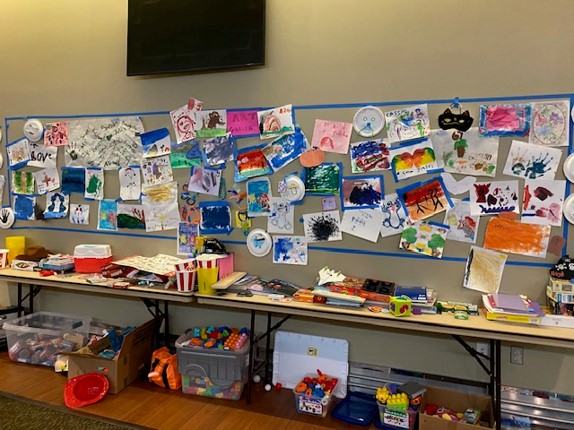
Currently, those displaced are still in long-term housing until their villages can be rebuilt, which will take many months to complete since all supplies need to be flown or shipped in.
Laura emphasized that her deployment experience in Alaska taught her to appreciate and learn about the unique characteristics of the communities that she serves.
“As a volunteer, you may know the ‘Red Cross stuff,’ but you don’t know the people or their customs. This group was very quiet and didn’t like to ask for help, but that doesn’t mean they didn’t have any needs. You have to realize the need is there even if they aren’t asking,” she said. “To me, I feel like I have come back fuller than when I left. I can work 16-hour days and I still feel invigorated by what I’m doing there. Everyone who came said the same thing about being so inspired by these Alaskan Natives and their welcome culture. You’re just proud to be able to help them.”
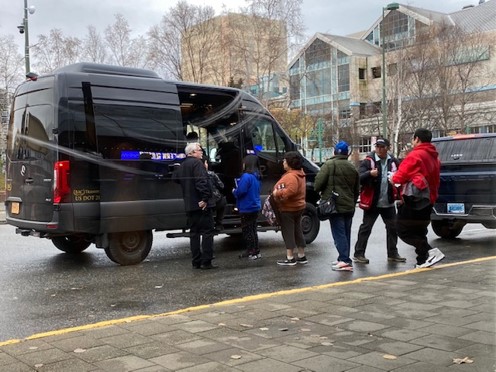
She gave credit to all the partners that the Red Cross worked with that made the relief operations in Anchorage such a success, such as World Central Kitchen, Team Rubicon and the Anchorage and Alaska Native cultural services.
“There’s so much we don’t know or resources we don’t have or we just don’t have the scope. Just bringing people in to help and to make a bigger impact was about us making sure that the residents have everything they need,” Laura said. “We don’t have to provide everything, but we can help facilitate everything.”
Learn more about our Disaster Relief Services here.
 Your Red Cross Update