
You Don’t Have to Be a Nurse to Help: Volunteer’s Story Shows There’s a Role for Everyone at the Red Cross
Tammy Salwasser from Alameda County thought she had to be a nurse to volunteer with the American Red Cross.
“I first heard about it from a girlfriend of mine who was a nurse and she would deploy,” says Tammy. Her friend encouraged her to join as a volunteer, but Tammy’s work experience was in customer service and sales; so, she didn’t think she was qualified to help. That is, until she learned that there is no requirement for specialized credentials for many volunteer roles, since the Red Cross provides free training.
“We need people,” her friend told her back then, and that is just as true today too. The Red Cross needs people to respond to the increasing numbers of disasters happening in communities across the nation.
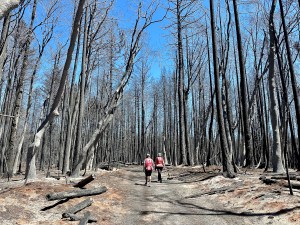
Tammy signed up to volunteer and tried a number of different roles with disaster response operations until she found her perfect fit.
She started by doing client case work during flooding in Grays Harbor in Washington State in 2015. She gathered affected people’s information to figure out their needs and determine if they qualified for financial help. The best part, according to Tammy: “It felt like I could directly help individuals.”
Then she tried a role called Mass Care Feeding that provides meals, snacks and water to people after a disaster. One memorable adventure came in 2016, when she joined a six-truck Red Cross caravan that drove across the country from Oakland, Calif. to North Carolina after Hurricane Matthew to give out hot lunches at community centers.
Although she was used to driving a big SUV to transport her sons, she had only driven a truck once before, when her family rented an RV for a holiday. Despite her lack of previous experience in handling a truck, she had a great time. “I really enjoyed driving the ERVs [emergency response vehicles] and going out into the community,” she said.
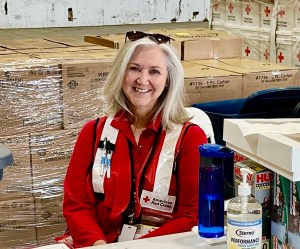
During her volunteer time, she had noticed groups of Red Crossers on disaster operations working with maps stuck all over the walls and wondered what they were doing. She found out the maps were for damage assessment. But, her first real glimpse into that work was after fires in Lake County, north of Napa, Calif. in 2015 when a colleague asked her to ride along to help find and photograph a house in a remote location. “We went up into the hills, where the roads were closed. But because we were Red Cross, we could go past the barricade to look for the house,” she recalled. She was intrigued and thought, “I can do this!”
Tammy completed the training and flew out to Florida in the wake of Hurricane Ian in 2022. After that deployment she was hooked!
“Disaster assessment is my favorite,” she says.
“We are the eyes and ears,” says Tammy of her team’s role on the operation. They walk through neighborhoods, up and down each street, taking photos of the state of each building and logging it into a cell phone app, which lets headquarters know what is happening in the field. The data she collects guides immediate relief services, supports recovery efforts and preserves a trusted historical record of community impact.
Tammy loves the independence of the role. It’s just her and a partner, in the car, on the road for hours, every day. There is lots of time to talk (or sing!) and build friendships. Tammy also appreciates not being cooped up inside. She loves to be “outdoors, out where the action was.”
Besides knowing she is providing crucial information that guides the disaster response, Tammy also finds it rewarding when she sees how the community appreciates the work of the Red Cross.
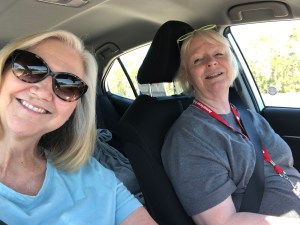
One time, she and her teammate stopped at a grocery store to buy some snacks while dressed in their “Red Cross regalia,” as she calls it. A woman stepped forward when she saw their Red Cross shirts and vests.
“She whips out her credit card and offers to pay,” remembers Tammy. The woman was grateful for the Red Cross. “Thank you for being here,” she said to Tammy.
Tammy loves disaster assessment work and advises anyone who is interested in trying the role to bring a friendly attitude, a good sense of direction, experience using cell phone apps and some good walking shoes or boots!
Hear Tammy talk about the Red Cross in this video.
 Your Red Cross Update