
The Black Cloud: A Pajaro Resident’s Story of When the Levees Broke

Written by: Jillian Robertson | Senior Manager, Long-Term Recovery Communications, American Red Cross
“People were caught off guard. It was 1 a.m. The levees were breaking, and we were told, ‘You’ve got to go!’ It was very traumatic.”
Joanne Jackson lived with her husband and her daughter in their home in Pajaro, California, before catastrophic floods forced them from their home two years ago, in December 2022.
For Joanne and her husband, they were lucky. The day before, the sheriff had warned them to evacuate. They left in their travel trailer where they’re still living today, as they work on repairs to their home that was rendered uninhabitable by the floods.
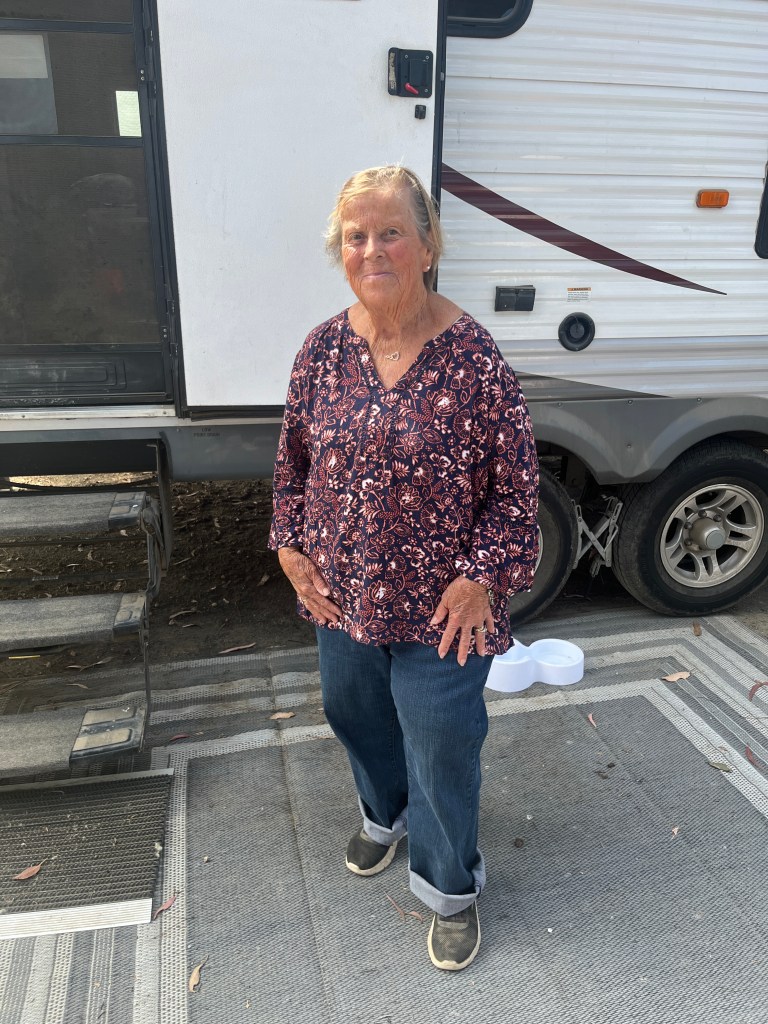
They have put $150K into the house to repair it so far and are still in process. In the meantime, they are living in a 27’ trailer. They’ve been there since March and in her words, “me and my husband haven’t killed each other,” which she considers a success.
The process of their recovery has been “slow but sure.”
Still, she fears not enough has been done to fix the levee. “If it rains again, my house will be back under water again.” All the work she’s done to repair her home over the past year will be for naught.
She’s 79 years old. As the rainy season approaches, “It’s like a black cloud hanging over our heads.”
A devastating flood inundated Pajaro, CA on March 11, 1995, and again on March 11, 2023. A flood on the very same day, nearly 30 years apart.
The black cloud is taking a toll on her. “Mentally, I have my ups and downs. Everyone’s on the same page.” “We love this area and want to stay here, but it’s not getting better.”
The financial assistance from the American Red Cross was “desperately needed.” Their insurance covered the structure, but didn’t cover their septic tank, which filled with water during the flood and had to be emptied. The Red Cross helped with that and generally “filled in the gaps,” providing food and cleaning materials in the wake of the disaster. Both she and her husband live on limited incomes, on social security. “Oh my goodness, if we had to go to the store and buy all those things, we couldn’t have done it.”

The Red Cross responders gave her more than physical items. To get them through a tough time, “They gave us supplies, they gave us friendship.” She remembers vividly their daughter slogging through the house in boots, shoveling out the mud that had gathered in the house.
“We’re all humans, we all have the same needs.” She’s proud of being self-sufficient and struggled at times to accept the help, but ultimately feels grateful for everyone who helped her and her family.
“Boy, is that appreciated, what the Red Cross and everyone else did.”
“I can’t even put into words. The word ‘thank you’ was becoming shallow to me, I said it so much.”
 Your Red Cross Update