There was that one time Ian Wigley gave CPR to a gentleman at a card game, and then there were those other times — at a wedding, a family gathering, and a restaurant — that he helped people who were choking. It’s fair to say that Ian, an Instructor Trainer with the American Red Cross, has a great track record for saving lives.
American Red Cross Instructor Ian Wigley
Ian teaches frequent first aid classes and says the training is important because, “You CAN help somebody. It will give you the skills and confidence to help until the Emergency Medical Service arrives.”
Ian’s classes include adult and child CPR, choking, how to stop life-threatening bleeding and how to use a defibrillator.
In addition to the people Ian has helped directly, there are also his students who go on to save the lives of others.
One especially rewarding experience was when a student he had previously taught rushed to tell him how they had been able to assist a coworker who went into cardiac arrest. That man recovered and eventually went back to work.
“I was kind of emotional,” Ian said. “I was excited they were able to help somebody. They had managed to keep calm and do what needed to be done.”
Class participants Andreina Pardo (left) and Gabrielle Valdez (right)
Gabrielle Valdez and Andreina Pardo attended a recent class taught by Ian. They were on a quest to get certified in first aid for their new jobs in child care.
“Before the class I felt nervous,” Gabrielle said. “Now I feel much more confident.”
They learned how to perform CPR, treat choking, and stop life-threatening bleeding. The Red Cross course they opted for was conducted partly online and partly in person.
“It’s important because you can save someone’s life,” Andreina said. “It’s to be better prepared.”
If you want to feel more confident that you can handle a first aid emergency, you can sign up for Adult and Pediatric First Aid/CPR/AED skills courses at www.redcross.org.
Red Cross teen volunteers spread awarenessabout the impact of armed conflict
By Marcia Antipa
“It’s just better for humanity that everyone knows about it.”
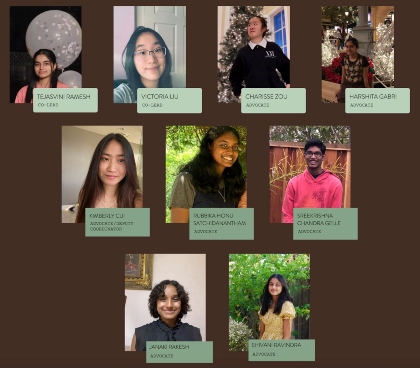
IHL In the Bay, a Youth Action Campaign team from the East Bay.
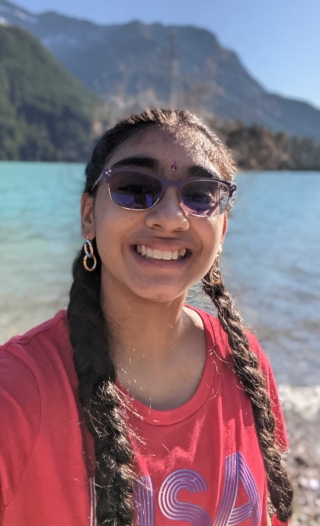
Bay Area teen Janaki Rakesh is talking about International Humanitarian Law (IHL), a set of rules developed under the Geneva Conventions designed to limit the impacts of armed conflict.
Rakesh and 40 other students in the Northern California Coastal Region are studying IHL through the Red Cross Youth Action Campaign (YAC).
Kimberly Cui says she signed up for YAC because “I just wanted to explore more about what other people in the world were facing.”
In past years, the campaign has focused on the effects of war on healthcare workers and on education. This year’s theme is cultural property.
“The destruction of cultural property’s permanent, so when it’s damaged or when it’s destroyed it has a direct impact on that particular community,” says Sarina Vij, Coordinator for the Bay Area YAC.
Vij says cultural property “is something that is of great importance to a particular community. It could be a statue; it could be a monument. “
For example, she cites the Taliban’s destruction in 2001 of two giant Buddha statues in Afghanistan that were 1600 years old.
Some teens are surprised to learn that the Red Cross is involved in International Humanitarian Law.
Harshita Gabri says, “Initially when I heard about Red Cross I thought of it as an organization that was in charge of blood donations.”
Priyanka Supraja Balaji
“Before I knew anything about the details about Red Cross, I always thought of it as an organization that provides humanitarian aid,” says Priyanka Supraja Balaji. “I wanted to be a part of spreading that mission and really being one of the people who is helping others.”
And Rubikka Satchidanantham says, “I thought this campaign was the perfect opportunity. Not only am I able to learn more about IHL, but I’m also able to educate others.”
Janaki Rakesh said she is passionate about teaching others about IHL, because she has followed the story of Malala Yousafzai. Malala is an outspoken advocate for girls’ education who survived being shot by the Taliban, and won the Nobel Peace Prize at age 17.
“I read all of Malala’s books. She’s a girl from Pakistan. Her life was destroyed by war.”
The YAC teams spread awareness about IHL through Instagram posts and Zoom game nights, where participants answer questions about war and cultural property.
Sreekrishna Gelle posted on the group’s Instagram feed about a firebombing during World War Two, “where American and British bombers basically flattened the entire city of Dresden in Germany which was a center of cultural, architectural and artistic history.”
“I have never seen a more creative group of individuals,” says Sarina Vij. “They are very good at coming up with different ways to navigate and problem-solve. “
One team held an online scavenger hunt, sharing food, clothing, and souvenirs from other countries. Victoria Liu says that made her appreciate her own Chinese heritage – and what cultural property means to others. “It represents a lot about people and if you destroy these properties, you’re destroying peoples’ identities.”
And the work doesn’t end when the games do. “We used feedback forms and heard back from people that they want to make it more engaging,” says Shivani Ravindra. “So we’re working on improving those for the next event.”
YAC presentations are all virtual for now, but team member Tejasvini Ramesh says that is their secret weapon.
“We’re able to spread awareness about it a lot quicker than we would through in-person events because with the power of social media we can reach lots of people from different parts of the world.”
Beyond teaching their classmates about IHL, several teens say they find the concepts comforting.
“During war, we think it’s all chaotic,” says Charisse Zou, “but I found it really fascinating how there were actually laws to protect the people and cultural property.”
“It gives me a really safe feeling,” says Priyanka Supraja Balaji. “Things that have such a personal attachment to you like a place of worship or anything like that won’t get targeted.”
Anyone can learn about IHL and take part in the teams’ online events. Just visit:
Story and photos by Alex Keilty/American Red Cross
American Red Cross Blood Donor Ambassador Volunteer Yichen Shi
Our Volunteers
As an American Red Cross Blood Donor Ambassador, Yichen can easily fit volunteering into her schedule as a pre-nursing student. “It’s really flexible and convenient to sign up for the time you want to do it,” she says.
She greets people who arrive to give blood at the Red Cross Blood, Platelet and Plasma Donation Center in San Jose and she keeps the donors’ snack table full of juice and cookies.
For Yichen, volunteering for the Red Cross looks good on her resume, and she also feels good about helping an important cause.
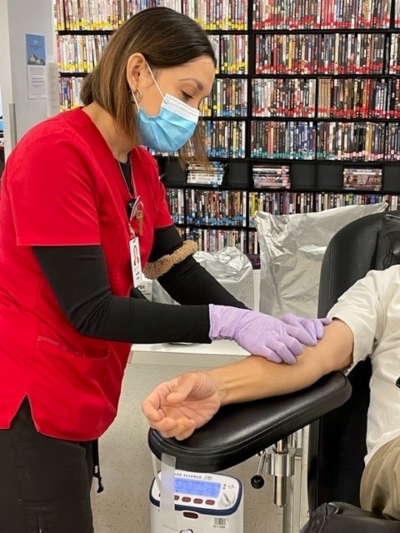
American Red Cross Blood Services Phlebotomist Astrid Savov
Our Staff
“The best part is when donors are happy,” says Astrid as she prepares to collect blood from a donor in San Jose. “When they say, ‘That was painless,’ it feels good.”
As a Red Cross Phlebotomist, Astrid collects blood from donors who visit the blood donation center. She admires those who donate because, as she says, “It’s people trying to do good.”
American Red Cross Blood Donor John Ahn
Our Donors
“I saw in the news that there is a nationwide shortage,” said John, as he gives blood in San Jose recently.
John is right, the Red Cross recently faced its worst shortage in more than a decade. Such bad news is what prompted John to make an appointment to donate.
During his donation appointments, John puts on earphones and enjoys the streamed shows available at the blood donation center.
Join us!
If you are interested in volunteering your time in support of your community, visit redcross.org/volunteer.
If you’re interested in joining the Red Cross – where your career is a force for good – visit redcross.org/careers.
To make an appointment to donate blood, platelets or plasma, use the Red Cross Blood Donor App, visit RedCrossBlood.org or call 1-800-RED CROSS (1-800-733-2767).




 Your Red Cross Update