
A Salute for Your Service: Our Partnership with David Grant Medical Center
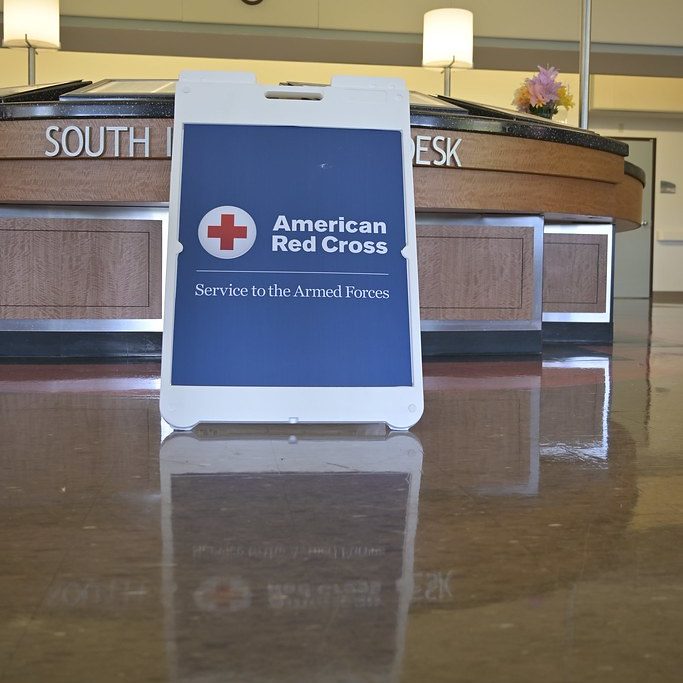
In the white, sterile halls of a hospital – any hospital, let alone one on a military base – you might expect to find expert medical care. But thanks to the American Red Cross, at the David Grant Medical Center (DGMC) on Travis Air Force Base in Fairfield, California, you’ll also find bright, cheery and helpful volunteers.
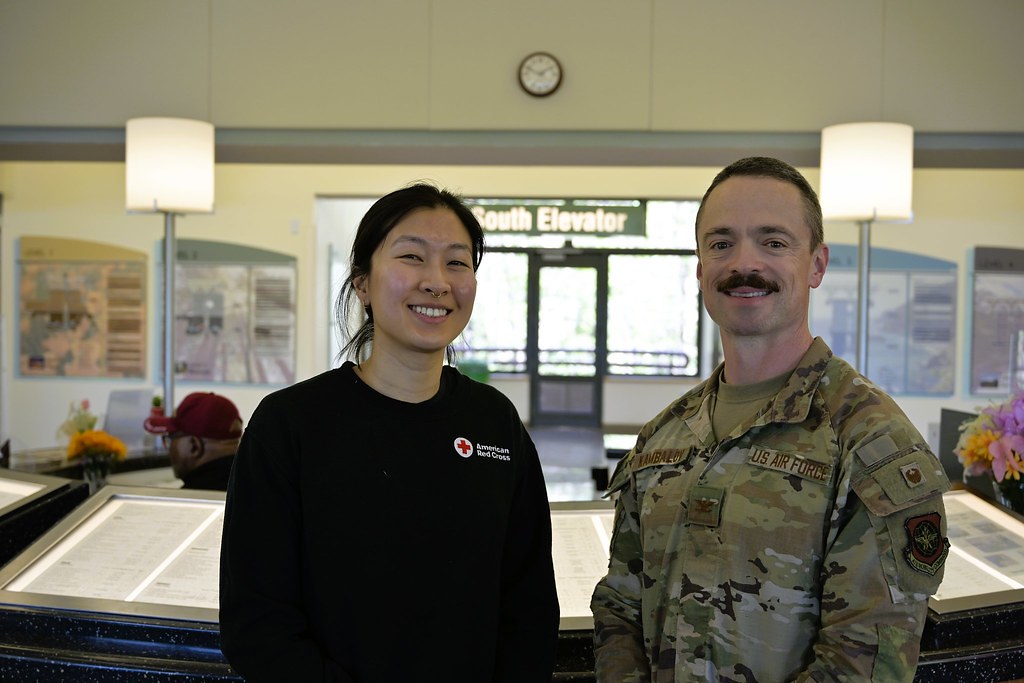
The Red Cross has a special partnership with the medical center where teens and other volunteers “are able to augment the hospital experience for patients, providing warm human interaction while allowing hospital staff to focus primarily on their medical duties,” says Nikki Rowe, Red Cross director of Service to the Armed Forces and International Services for the Northern California Coastal Region. Nikki has been managing the relationship with the DGMC for several years as part of her responsibilities.
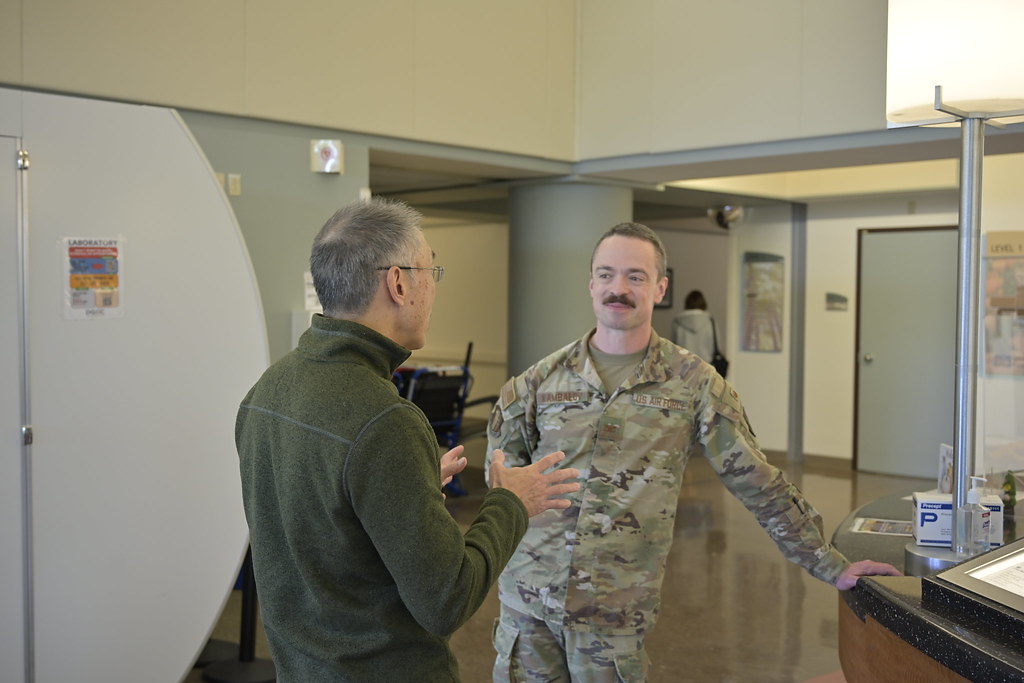
Nikki meets monthly with Col. Alexei Kambalov, USAF, MSC, FACHE, who is the DGMC’s 60th medical group administrator. Col. Kambalov says that the hours the volunteers put in equates to the equivalent of 3.5 full-time employees per month. “That’s 3.5 FTEs for free, courtesy of the Red Cross. Some of whom are highly credentialed,” he says. “It’s hard to put a dollar value on that.”
“It’s hard to put a dollar value on [the hours the volunteers put in].”
60th Medical Group Administrator, Col. Alexei Kambalov
Nikki says one of her major duties is to continually recruit and onboard volunteers for the medical center, which is not easy because to work there, prospective volunteers must have formal access to the military base. This means the pool to recruit from is small, and volunteers are either active military, military retirees or part of a military family.
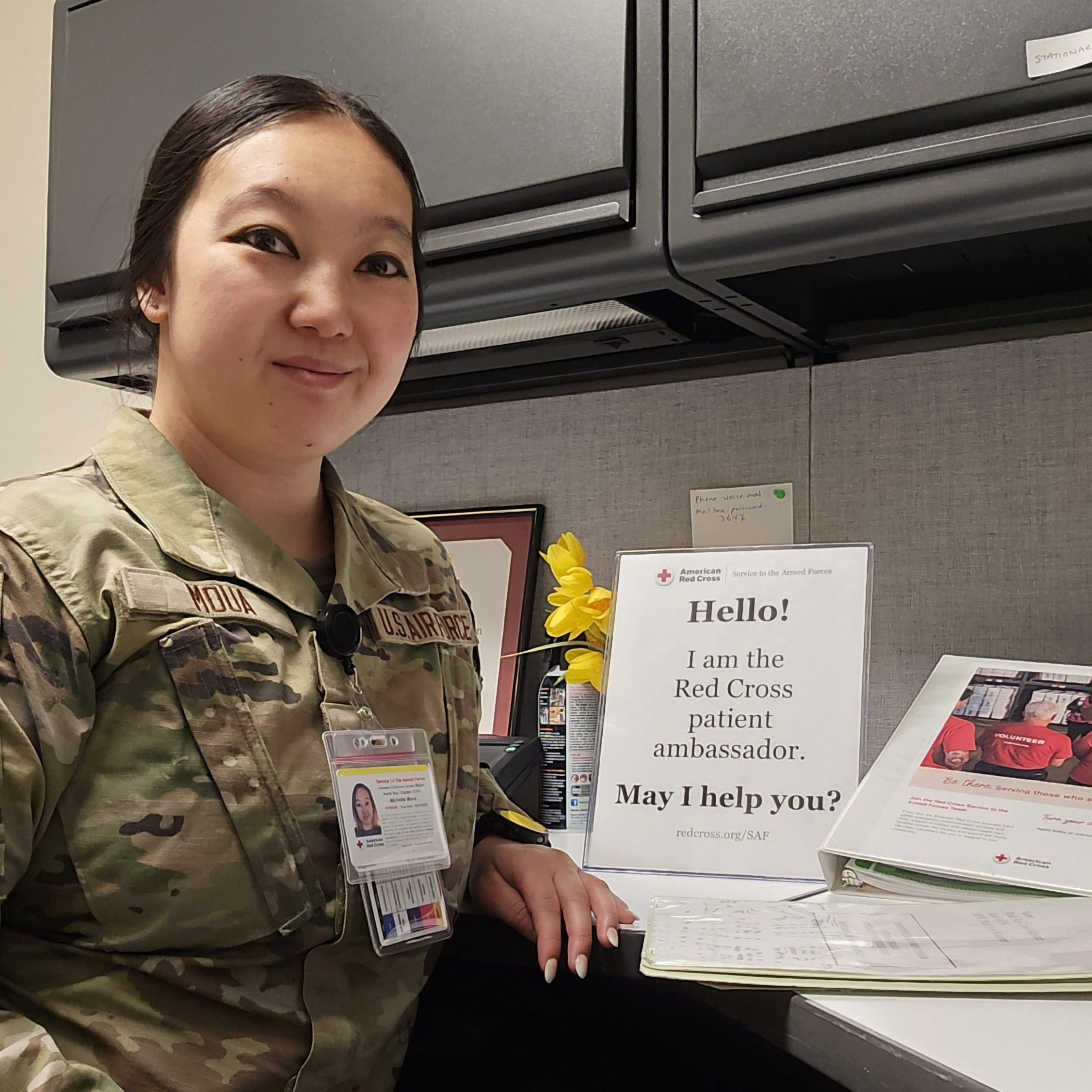
Michelle Moua is one such volunteer. Her regular job on the base is as an Aviation Resource Management specialist. Because she believes “altruism is a different sensation of happiness,” she volunteers with the Red Cross. Her role is to assess the qualifications of other volunteers at the DGMC and ensure they have the right qualifications and paperwork completed.
Currently in her fourth year with the U.S. Air Force at Travis, Michelle says she initially didn’t know much about the Red Cross’ involvement with the military. Now aware of the Red Cross’ dedication to military members, veterans and military families, Moua helps spread the word about Red Cross services and programs. She hopes that more people on base will become aware of these services as well as consider becoming a volunteer with the Red Cross.
The Red Cross also supports the doctors who volunteer in the Flight Medicine Clinic. All three – Danilo Canlas, MD; Justin Nast, MD; and James Bermudez, MD – are retired from active-duty in the Air Force. According to Col. Kambalov, “they have all been fundamental to the success of the OMRS (Operational Medical Readiness Squadron) mission. Each member has dedicated time to screening, processing and validating annual flight physicals, assisted in processing medical clearance and performed deployment-related health assessments.” Oftentimes, these assessments are needed at the last minute, and all three have been willing to jump in and spend the hours necessary to ensure that all those who need to deploy are taken care of.
“These specialists could earn as much money as they wanted (if they were contract providers),” Col. Kambalov says. “But they volunteer with us.” He could not be more grateful.
About this special partnership
Although it began years ago, Col. Kambalov says the partnership with the Red Cross was paused during the COVID-19 pandemic and needed to be relaunched when he got to the base. Today, the Red Cross validates the credentials of health care workers such as physical therapists, lab technicians and phlebotomists. It recruits all the volunteers, including the flight surgeons, and also helps the DGMC track volunteer hours.
The Patient Ambassador program managed by the Red Cross is where the warm fuzzies come in. Older, usually retired volunteers sit at the north and south entrances to the medical center on weekdays to greet visitors and patients, answer phones and provide directions. They also help with pushing wheelchairs that patients may need to get to an appointment.
A new program, “VolunTeens,” provides high school students with the opportunity to assist with these and other duties. “I’m excited about the school year wrapping up,” says Col. Kambalov. “The students are in school all day during business hours, but in the summer, they can rack up their volunteer hours with us. They could be running lab drop samples, carrying messages or any number of activities.”
VolunTeens may also bring meals to patients and visit with them while they eat, providing friendly company. Hospital dieticians approve, as this encourages patients to consume more calories – which can otherwise be a challenge.
The success of this special partnership will be determined by the number of volunteer positions filled and tasks effectively completed. But Col. Kambalov has no concerns about that.
They contribute to our bottom line and help keep some of our clinics afloat. That’s not an exaggeration.”
60th Medical Group Administrator, Col. Alexei Kambalov
“The administrative overhead for us is extremely low (because of this partnership),” he says. The Red Cross volunteers provide “added value, with 100 percent return. They contribute to our bottom line and help keep some of our clinics afloat. That’s not an exaggeration.”
He adds, “Please give my thanks to the Red Cross for this highly valuable workforce.”
 Your Red Cross Update